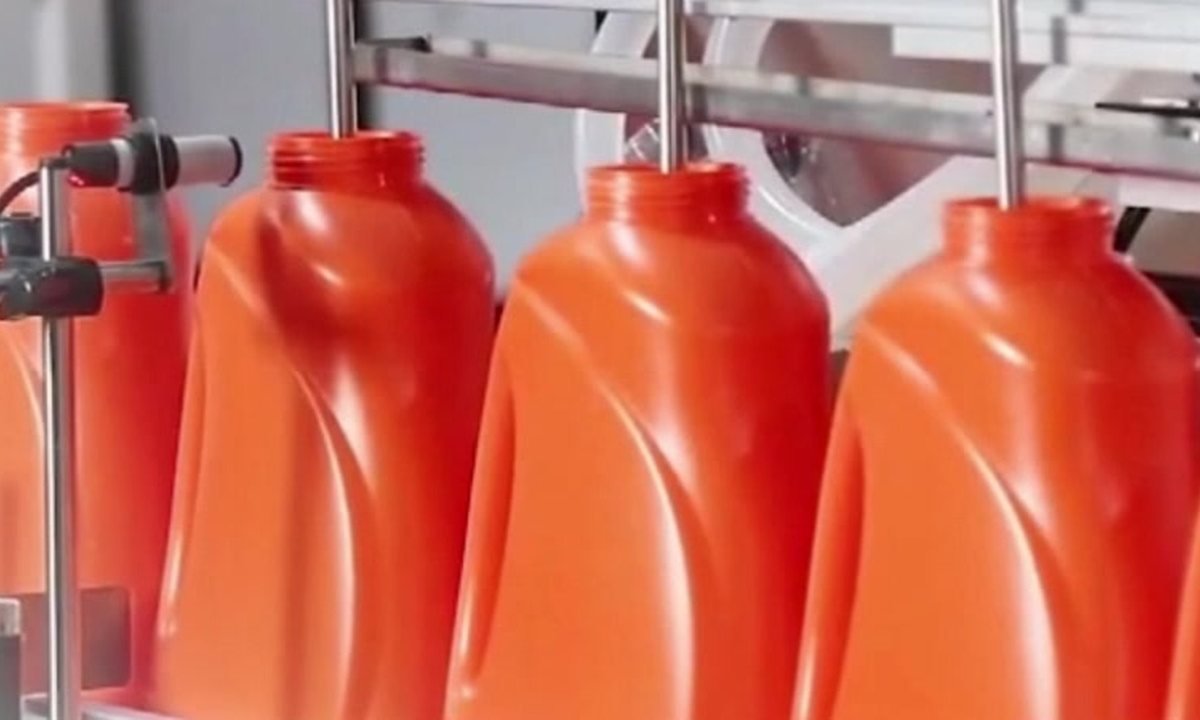
Cleaning-product bottle lines
Filling, trigger or pump capping, wrap labelling and coding for multi-SKU household and industrial cleaners.
Read moreIntegrated line projects
A chemical packaging line should be specified as one working line. The filler, capper, labeller, conveyor, coding system and operator workflow all affect finished-pack quality and practical output.
Specification
Many packaging problems appear at the interfaces: bottles arriving too close together, filled packs becoming unstable, caps slowing the filler, labels missing shaped panels or operators having poor access for changeovers. Line planning reduces these mismatches early.
Choose your equipment
Different chemical product families require different line emphases.
Filling, trigger or pump capping, wrap labelling and coding for multi-SKU household and industrial cleaners.
Read more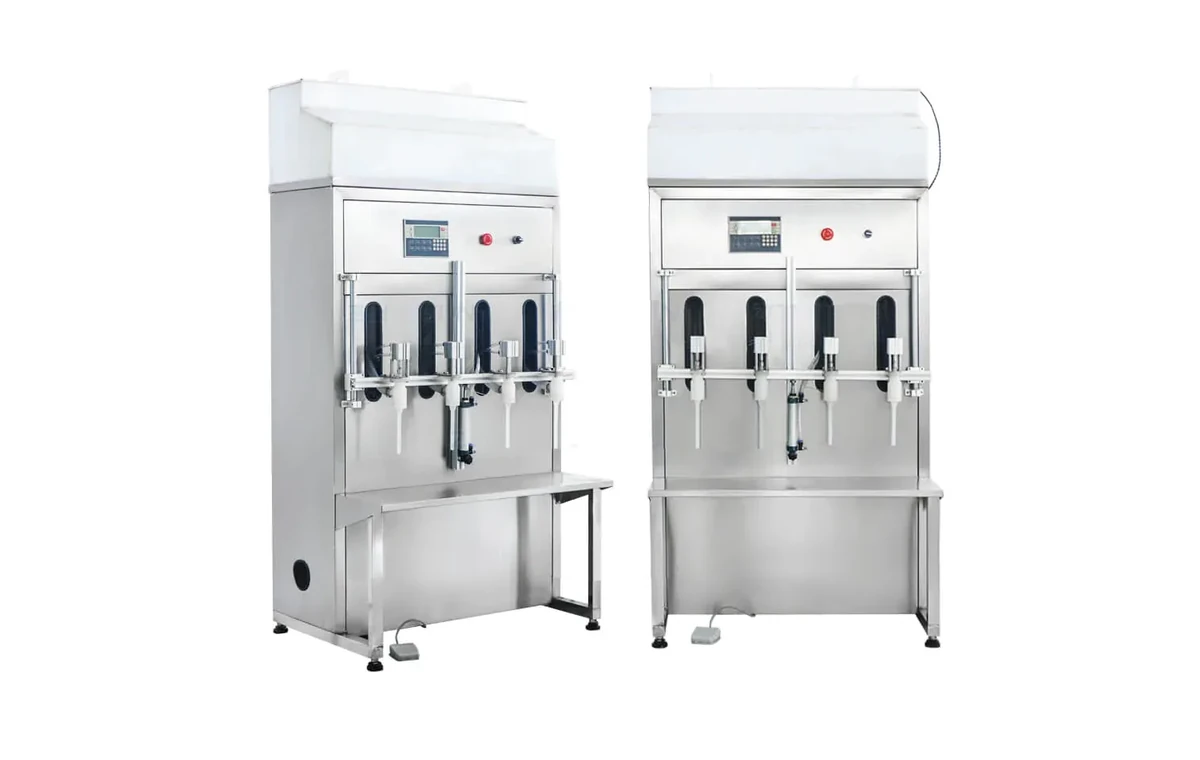
Compatibility-led filling with closing and spill-control planning for aggressive liquids.
Read more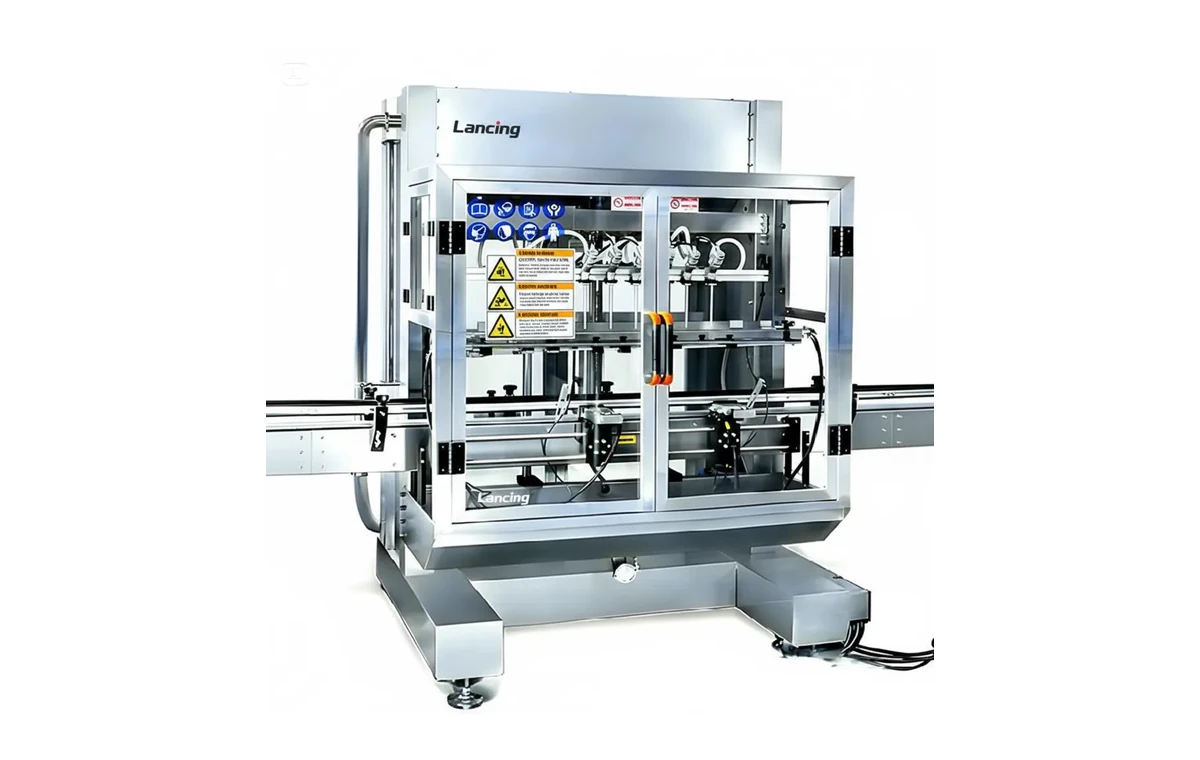
Project-led line planning where product data and installation area shape machinery selection.
Read more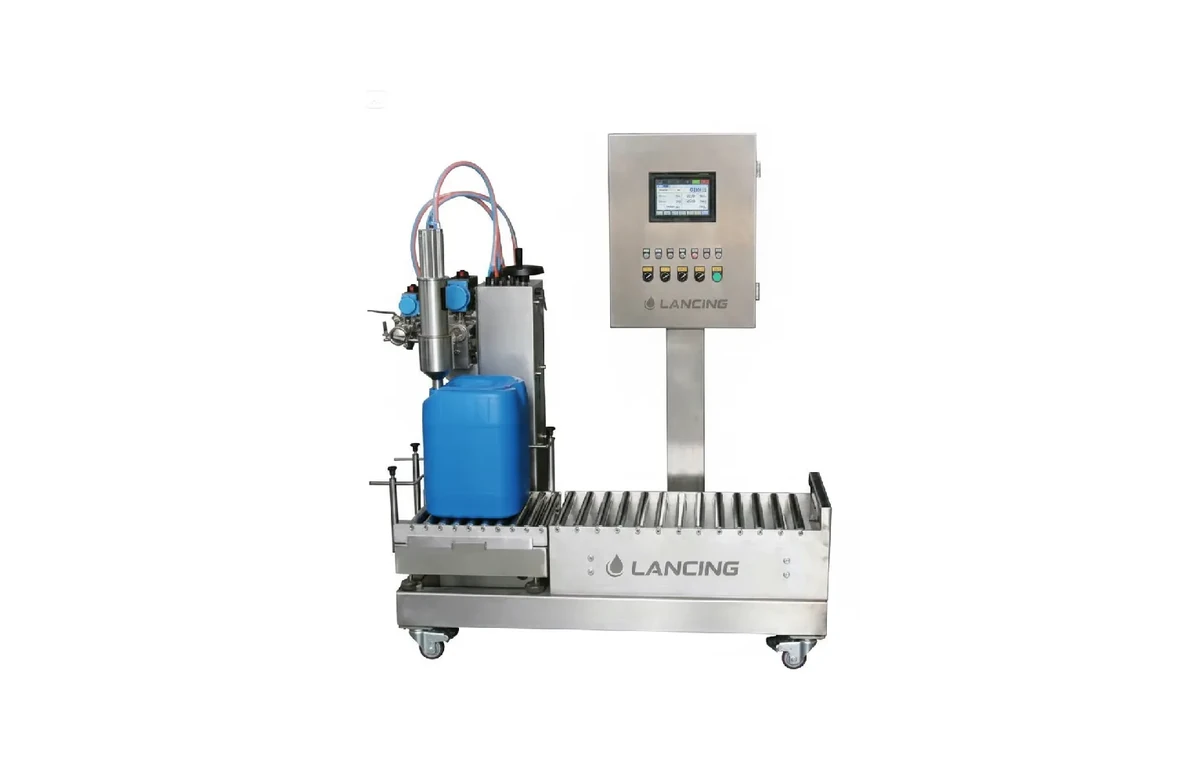
Large-container filling, capping, labelling and outfeed designed around heavy packs.
Read moreComparison
| Line area | Questions | Why it matters |
|---|---|---|
| Infeed | Manual loading, turntable, unscrambler or conveyor? | Controls practical line speed and labour |
| Filling | Which product drives the hardest fill cycle? | Determines number of heads and fill principle |
| Capping | Manual cap placement or automatic feeding? | Often defines the true bottleneck |
| Labelling | Round, flat, wrap, front/back or shaped pack? | Affects container control and presentation |
| Changeover | How many SKUs and how often? | Determines tooling, settings and training |
| Installation | Access, utilities, floor space, operators and safety? | Prevents costly commissioning problems |
Process
Collect product, container, closure, label, output and layout information.
Decide whether filling, capping, labelling, changeover or handling is the bottleneck.
Compare semi-auto, compact automatic, inline or staged automation approaches.
Prepare installation, training, spares and operator documentation requirements.
FAQ
Yes. Some projects start with filling and capping before adding labelling, conveyors, coding or higher automation later.
It varies. For chemical products, bottlenecks often appear in foaming fill cycles, cap feeding, trigger closures, changeovers or heavy-container handling.
Samples, clear photos or accurate dimensions are strongly recommended because bottle stability, neck finish, label panel and closure behaviour all affect machine selection.
Speak to Lancing
Send the product, fill volume, container, closure and target output. Include SDS and compatibility notes where relevant.
Integrated production
A complete line is not proved by demonstrating each machine separately. Containers, product, closures, labels, controls, operators and utilities must move through an agreed process. The project scope should identify who supplies and controls every interface, where responsibility changes, what happens during a stop and how acceptable finished packs will be measured.
| Interface | Decisions to document | Typical evidence |
|---|---|---|
| Bulk product to filler | Source vessel, pump, level control, pressure, recirculation, heating/cooling, filtration and isolation | P&ID or process sketch, connection schedule, materials list and control description |
| Filler to capper | Container pitch, fill settling, neck cleanliness, open-pack time, accumulation and spill control | Layout, conveyor speeds, sensor logic, stop/restart sequence and filled-pack samples |
| Capper to labeller/coder | Cap orientation, bottle stability, squeeze, label panel, product residue and reject handling | Component drawings, label roll, code requirements, inspection and reject test |
| Machine-to-machine controls | Run permissives, blocked/starved signals, emergency stop, fault ownership and reset philosophy | Interface matrix, I/O list, sequence description and witnessed fault tests |
| Safety and containment | Guarding, access, extraction, earthing/bonding, spill trays, drains and hazardous-area boundaries | Risk-assessment inputs, layout, zoning information, safety-function schedule and site responsibilities |
| Handover and support | FAT/SAT, training, manuals, spares, maintenance, backups and open actions | Acceptance protocol, signed records, document register and action close-out list |
Line balance
The filler may not be the slowest or least reliable stage. Cap replenishment, trigger handling, label application, coding, container stability and manual case packing can determine sustainable output. Define a production period long enough to expose replenishment, micro-stops and normal operator tasks, then count conforming finished packs after all agreed checks.
Include accumulation deliberately. Too little buffer can cause every capper or labeller stop to interrupt an open-container filling process; too much can create uncontrolled WIP or extend the hazardous area. Confirm how full and empty conveyors are detected and how the line stops without overfilling, spilling or losing pack identity.
Chemical Fillers UK should retain product-chemistry and fill-path decisions. Detailed line layout, controls, complete-line FAT/SAT and integration ownership belong on Packaging Lines UK. Use that route for a project where filling is one stage of a broader packaging system.
FAT and SAT boundary
FAT should use representative product, containers, closures and labels wherever practical. Test normal running, planned stops, starved and blocked conditions, changeover, cleaning and agreed safety functions. SAT then verifies the installed utilities, floor levels, extraction, earthing, interfaces, access and operator procedures. Record actions and retest criteria; acceptance should not depend on an undocumented demonstration.
Define process stages, battery limits, good output and responsibilities.
Coordinate mechanical transfer, controls, safety, utilities and operator access.
Run representative packs and record performance, faults, changeover and actions.
Verify the installed line, train operators and close documentation and support items.
Complete-line FAQ
It is the defined boundary of supply and responsibility, such as the product connection to the filler or the discharge from a conveyor. Each mechanical, electrical, control and utility interface should have an owner.
Agree the test duration, products, formats, operator tasks and quality checks. Count acceptable finished packs at the stated discharge and record rejects, stops and exclusions.
Sometimes, after a survey confirms condition, working height, guarding, controls, documentation, spare support and whether its real performance matches the new line.
Responsibilities depend on the supply scope and applicable law. Define them contractually and obtain competent machinery-safety and conformity-assessment advice for the assembled line.
Calculate enough for setup, the agreed timed run, low/high fills, faults, changeover and cleaning, allowing for retained and rejected material. Confirm safe transport and disposal before the test.
No. SAT verifies agreed installed-system criteria. Ramp-up may continue afterwards as operators build experience and product/pack variation is encountered; define support and action ownership for that period.
Integrated line brief
Share the process, products, formats, output, layout, existing machinery, utilities and acceptance requirements.
Traceable line acceptance
A complete-line FAT should record enough detail for the test to be understood after the machinery has left the factory. The protocol needs a defined product and pack matrix, a configuration baseline, measurable acceptance criteria and a way to record planned stops, rejects and open actions. A video of the line running can support the record, but it does not replace the signed data and configuration evidence.
| Record section | Information to capture | Why it matters |
|---|---|---|
| Test configuration | Machine tags, installed options, software versions, recipes, change parts, nozzle/capper settings and approved deviations | Shows exactly which line configuration produced the result |
| Product and components | Product batch and condition, container/closure/label versions, sample quantity and any safe substitute agreed | Prevents an unrepresentative pack or liquid being treated as universal evidence |
| Measurement method | Reference instruments, calibration status, fill calculation, torque/seal/label checks and reject criteria | Makes acceptance objective and repeatable |
| Timed production run | Start/end time, good discharge count, rejects, stops, replenishment, operator tasks and excluded events | Separates sustainable good output from nominal machine cycles |
| Fault and recovery tests | Starved/blocked states, missing pack or cap, product loss, emergency stop, power/air loss and controlled restart | Proves interfaces and recovery without unsafe or uncontrolled filling |
| Changeover and cleaning | Format conversion, recipe selection, retained product, flush/drain sequence, first acceptable pack and waste handling | Tests the work that occurs between production campaigns |
| Actions and handover | Observation, owner, due date, retest criterion, evidence supplied and final close-out | Prevents unresolved work being lost between FAT, delivery and SAT |
Handover register
Site acceptance should not repeat the factory test without considering what changed during installation. Verify incoming product conditions, utilities, floor levels, guarding interfaces, extraction, bonding/earthing, containment, conveyor connections, data or coding interfaces and the real operator work area. Any FAT limitation or substitute material should remain visible until it is closed with the production product and packs.
Agree which documents are issued before delivery, which are updated after installation and who controls the final versions. The register may include manuals, drawings, parts lists, settings or recipe backup, declarations, risk-assessment information, test certificates, training records, maintenance schedules and the final action list, according to the agreed supply scope.
Complete-line ownership
Use the chemical filler FAT questions to prepare the test evidence. Where the project extends beyond the chemistry-led filling scope, continue through Packaging Lines UK for detailed line layout, controls and integration ownership.
Line control philosophy
Integrated performance depends on the interfaces between machines. The line specification should state which machine owns each sensor and decision, how permissives are exchanged, what happens to product and packs during a downstream stop, and how an operator returns the line to a known state after a fault.
| Line function | Control decision | Evidence at FAT or SAT |
|---|---|---|
| Start and product enable | Which guards, utilities, product-supply and downstream-ready signals are required? | Cause-and-effect sequence and challenged permissives |
| Container tracking | How is a pack identified through fill, cap, label, code and inspection? | Challenge gaps, doubles, missing containers and controlled line clearance |
| Downstream stop | Does the filler stop immediately, complete an in-process fill or enter a controlled hold? | Observed stop with retained product, filled packs and restart documented |
| Reject management | Which defects are detected, where is the pack rejected and how is reject confirmation handled? | Deliberate defect challenges and reject-bin or removal verification |
| Recipe and changeover | Which settings are recipe-controlled and which require mechanical confirmation? | Approved recipe list, access levels, first-off check and line-clearance record |
| Data and batch records | Which counts, alarms, settings or inspection results must be retained by the machine or site system? | Agreed data export, record ownership, clock and backup checks |
From design to production
Use the line documentation guide to define drawings, controls, recipes, manuals and test records. Use the commissioning and handover guide for site start-up and the management-of-change guide when products, packs, software or connected equipment are altered.
Complete line scope
Include existing equipment, site systems, pack flow, quality checks, control interfaces and required handover records.
Complete-line questions
These answers are written for early project definition. Final machine suitability depends on the actual formulation, packs, site conditions and representative testing.
The line should identify conditions that affect safe operation, dose quality, closure or label quality, reject integrity and controlled recovery. Define each permissive and stop response, who may acknowledge or bypass it, and which events need a time, recipe, batch or user record.
The alarm, interlock and record guide provides a practical question set without assuming a particular control platform.
Measure accepted finished packs over an agreed representative period, with normal replenishment, operator tasks and connected stations active. Define what makes a pack good: quantity, neck cleanliness, closure, seal, label, code and reject status. The count should exclude packs that later require rework.
Record starved and blocked time, planned stops, faults, rejects and the reason for each significant interruption. This shows whether the limiting station is filling, capping, labelling, product supply or handling.
Place accumulation where a short downstream stop can be absorbed without leaving containers under nozzles, uncapped for too long or exposed to spill and contamination. The right position depends on container stability, open-pack time, capper recovery, labeller sensitivity and the behaviour required after an emergency stop.
Model the sequence, not just the conveyor length. Define what each machine does when upstream is blocked or downstream is starved.
Create each detectable fault deliberately, confirm that the affected pack is identified, tracked and physically segregated, and prove the line knows whether the reject action succeeded. Test a full reject bin, blocked reject path, failed sensor, pack spacing variation and recovery after stop.
At SAT, repeat the challenges with the installed conveyors, production packs and site interfaces. A reject command alone is not evidence that the wrong pack was removed.
Speak to Lancing
Include every station, container and closure family, normal operator tasks, required records, reject philosophy and the conditions that define an accepted finished pack.
Lifecycle-ready handover
A filling line can pass FAT and still become difficult to support if the final machine configuration, critical spares, calibration references, recipes, sensor settings and software backups are not tied to the accepted production duty. The handover register should identify who owns each record and what must be rechecked after intervention.
Record the approved check equipment, method, product condition and head-by-head verification states.
List exact seals, hoses, tubes, pump parts, valves and nozzles that preserve the approved contact path.
Retain recipes, set points, software versions, backups, access levels and restoration responsibility.
Recheck fill quantity, cap/liner integrity, label presentation, coding, inspection and reject confirmation as applicable.
Use the calibration and verification guide and critical spares register as controlled handover documents alongside the existing FAT, SAT and line-documentation records.
Line balance and loss states
The slowest nominal machine is not always the real bottleneck. Closure replenishment, bottle instability, label-web changes, code verification, reject confirmation, accumulation and operator intervention can create shorter repeated losses that reduce accepted output without appearing in a single-machine speed table.
Record the expected cycle and buffer between infeed, filling, capping, labelling, coding, inspection and discharge. Define which station commands a controlled stop, whether filled but uncapped containers are retained, how rejects are tracked and how the line prevents duplicate filling or capping after recovery.
Continue with the chemical filling line OEE and good-output guide for the timed test, event categories and accepted-pack evidence.