Site start-up
Chemical filling machine commissioning and handover.
Move an accepted machine from delivery through installation, site verification, training and controlled production release.
- Written for chemical filling projects
- Qualitative guidance where project data is not verified
- Requirements should be confirmed by trial and site review
Factory to site
A successful FAT does not replace site commissioning.
The installed machine uses the site’s power, air, product supply, extraction, containment, containers, closures, operators and connected equipment. Commissioning confirms that these real interfaces match the assumptions used during design and factory testing.
Plan the sequence before delivery so that access, lifting, utilities, product, waste, test equipment, responsible people and safe working arrangements are available when needed.
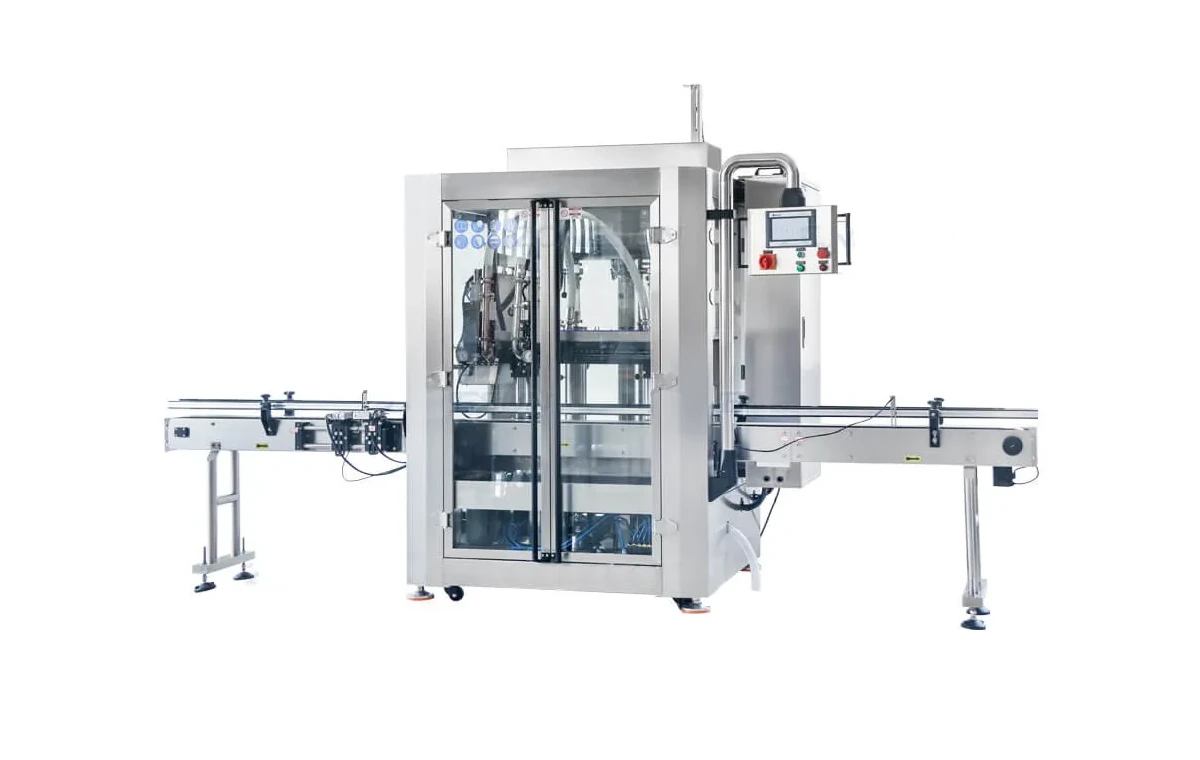
Release production deliberately
Define who can approve dry checks, product introduction, SAT completion, open deviations and routine production.
Commissioning sequence
Verify installation, function, product and people in controlled stages.
| Stage | Typical checks | Record |
|---|---|---|
| Pre-delivery readiness | Access, foundation or floor, utilities, extraction, containment, bulk feed, drains, samples and site permits | Site-readiness checklist and unresolved actions |
| Mechanical and electrical installation | Position, level, guards, connections, direction, labels, isolation, network and interfaces | Installation inspection and updated drawings |
| Dry commissioning | Manual functions, sensors, interlocks, e-stops, alarms, conveyors, recipes and simulated faults | Functional challenge results and deviations |
| Wet commissioning | Product feed, prime, fill profile, drips, foam, containment, cleaning and first-off checks | Product, pack, settings, measurement and observations |
| Integrated SAT | Good packs, start/stop, connected equipment, rejects, recovery, output and site quality checks | Approved SAT protocol and signed results |
| Training and handover | Operation, changeover, cleaning, inspection, fault response, maintenance and backups | Attendance or competency record, final manuals and document register |
| Production release | Critical actions closed, temporary controls approved, spares available and monitoring defined | Authorised release and post-start review plan |
Open-action control
Do not let a punch list become an undefined production risk.
For every action
- Describe the deviation or missing evidence
- Assess safety, quality and production impact
- Assign owner and target date
- Define temporary control if operation continues
- State evidence required for closure
Before final handover
- Issue final drawings and manuals
- Back up programs and approved recipes
- Confirm spare and consumable parts
- Record training and support contacts
- Close or formally transfer every action
Related evidence
Use the acceptance and documentation files together.
Define the requirement in the chemical filling URS and the handover records in the line documentation guide. Any post-acceptance change should follow the management-of-change process.
Buyer questions
Questions about chemical filling machine commissioning and handover.
What is the difference between FAT and SAT?
FAT verifies agreed criteria at the supplier or factory under the available conditions. SAT verifies the installed system and site interfaces. The protocols should identify what is proved, simulated or deferred at each stage.
Can commissioning use water instead of the product?
A safe surrogate can help with initial checks when agreed, but it may not reproduce chemistry, viscosity, density, foam, vapour or cut-off. Critical product behaviour should be verified with approved representative material.
Who should attend commissioning?
Attendance depends on scope, but the people who own operation, engineering, maintenance, quality and safety decisions should be available for the relevant stages.
When is the machine ready for production?
Only when the user’s authorised release criteria are met, critical actions are closed or controlled, operators are trained and required records are available.
Should recipes be backed up at handover?
Yes where the control system supports them. Define program, recipe and parameter backup format, storage, access and restoration responsibility.
Speak to Lancing
Turn the guidance into a project-specific requirement.
Send the product, pack, output, site and evidence available. Lancing can review the machinery route and identify items that need samples, trials or specialist site input.