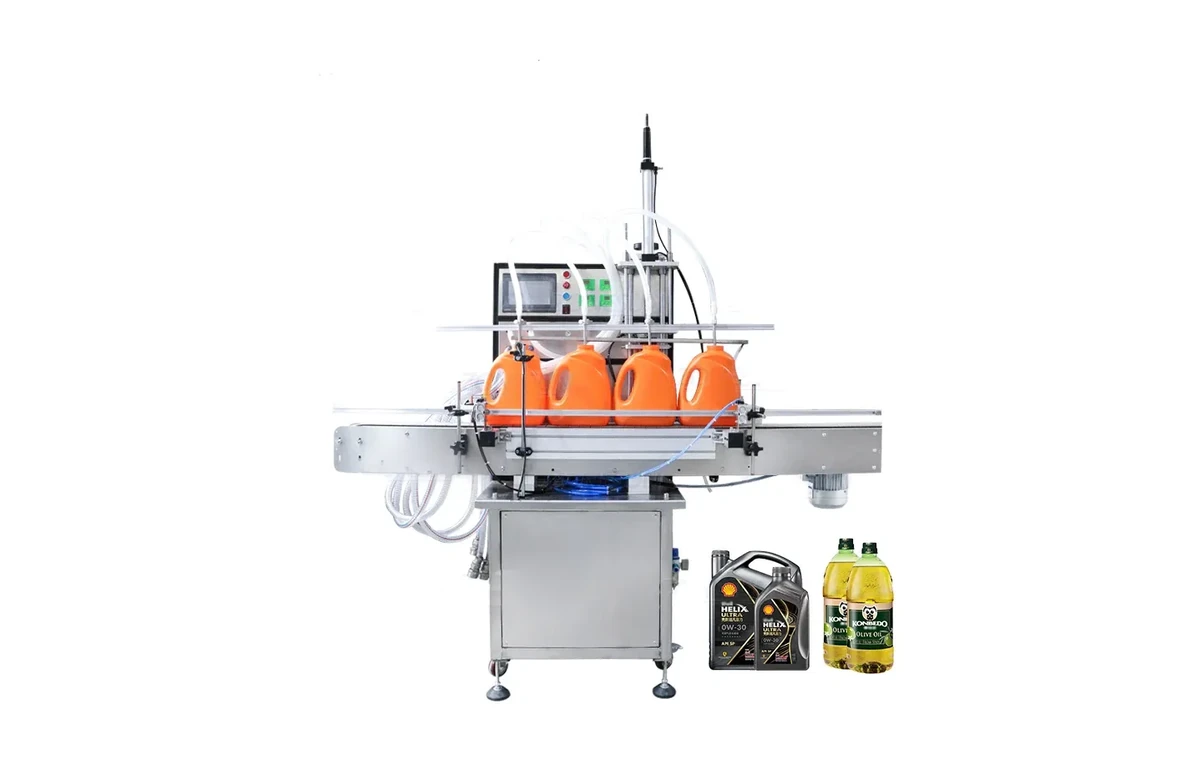
Foamy liquid filling
Controlled flow, diving nozzle options and fill sequencing for products that foam during the filling cycle.
Read moreDetergents and cleaners
Detergent, sanitiser and household-chemical filling lines are often shaped by foam control, bottle stability, closure choice and frequent SKU changeovers. The filler and capping equipment should be considered together.
Specification
A detergent can be water-like but still difficult to fill cleanly if it foams heavily. Trigger and pump closures also change the capping and handling method, so a detergent filling enquiry should include both product and pack details.
Choose your equipment
Build the line from fill profile, closure family and container handling.
Controlled flow, diving nozzle options and fill sequencing for products that foam during the filling cycle.
Read more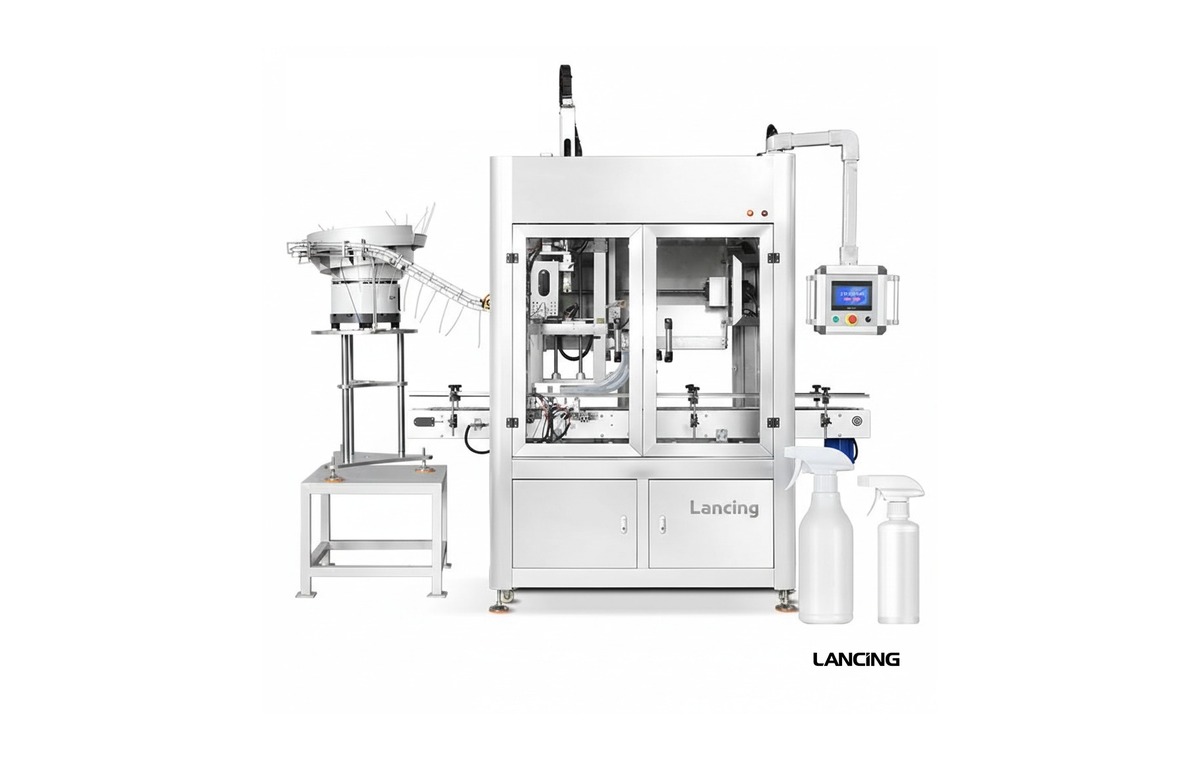
Specialist closure handling for bottles with long trigger heads, pumps or spray assemblies.
Read more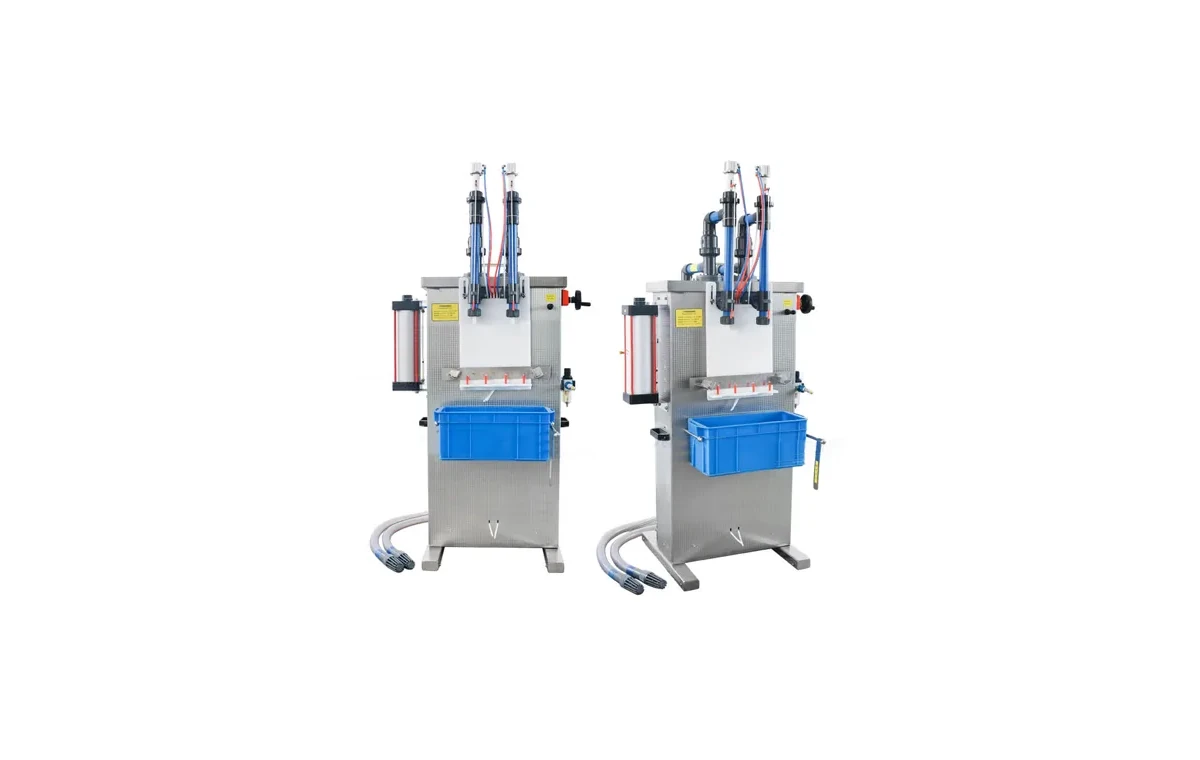
Options for bleach-based cleaners, descalers and products that need compatibility review.
Read more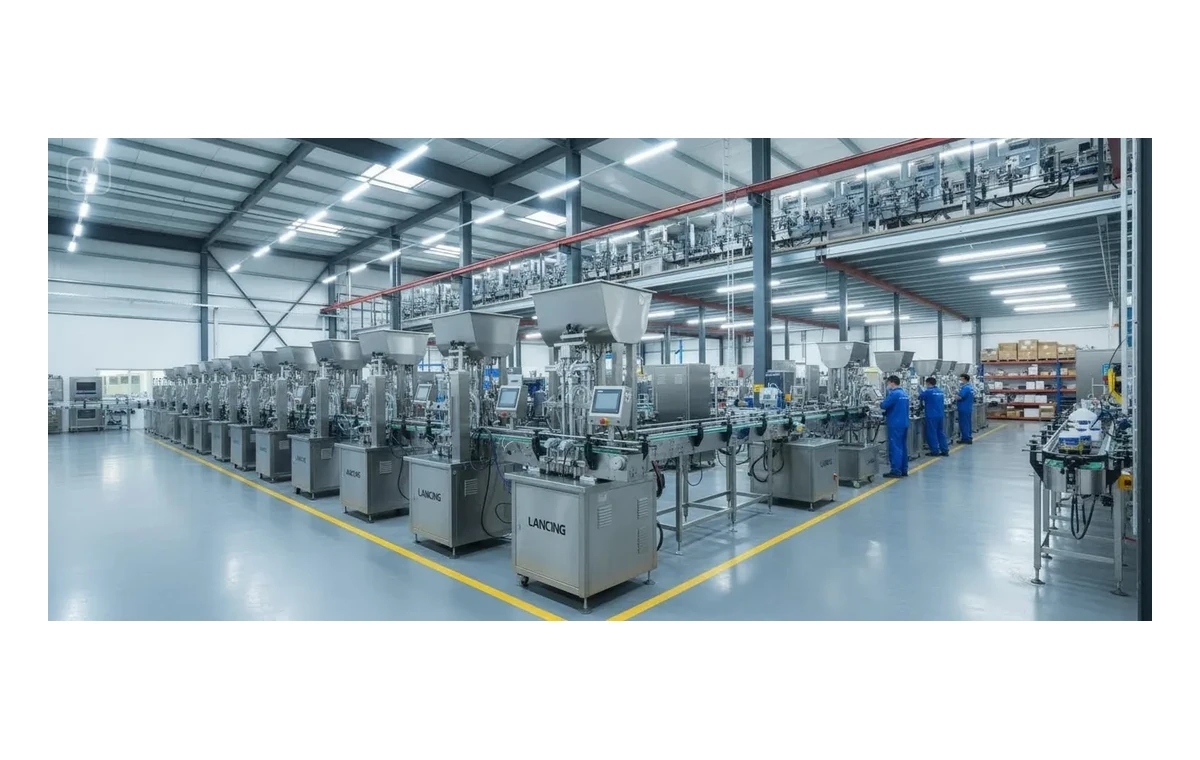
Filling, capping, labelling, coding and conveyors planned for multi-SKU household and industrial cleaning lines.
Read moreComparison
| Detail | Why it matters | Line impact |
|---|---|---|
| Foaming level | Foam can slow the filling cycle and affect fill presentation | Nozzle design and fill-speed control |
| Bottle family | Tall, flexible or shaped bottles may need extra handling | Conveyor guides and stability |
| Closure | Triggers and pumps require different capping methods | Cap feed, manual placement or specialist capper |
| SKU range | Frequent changes can reduce practical output | Change parts and adjustments |
| Label panel | Presentation matters in retail cleaning products | Labeller choice and bottle control |
FAQ
Yes, provided the filling method and fill profile are chosen around the product's foaming behaviour.
Often, but the choice depends on viscosity range, foaming differences, bottle sizes, closure styles and cleaning or changeover needs.
Trigger closures often need different handling from standard screw caps, so the capping method should be reviewed early.
Speak to Lancing
Send the product, fill volume, container, closure and target output. Include SDS and compatibility notes where relevant.
Foam-control engineering
Detergents and cleaners can foam because of product formulation, pump action, suction leaks, recirculation, nozzle velocity and the impact of liquid on the container. The best solution is usually a combination of stable product supply, controlled flow and suitable nozzle movement rather than simply slowing the whole machine.
| Foam source | Machine option to evaluate | What to test |
|---|---|---|
| High-velocity impact in an empty pack | Reduced initial flow, angled entry or diving/bottom-up nozzle | Foam height, nozzle clearance, cycle time and product left on the neck |
| Air drawn into the product supply | Shorter suction path, flooded supply, leak-free connections or different pump route | Prime stability, bubbles after pauses and performance at low bulk level |
| Pulsing pump or abrupt valve action | Damping, controlled acceleration/deceleration or alternative dosing principle | Head-to-head repeatability, splash and settled fill |
| Over-fast final stage | Two-stage fill or slower top-off | Settling time, fill tolerance and total cycle |
| Product change or warm formulation | Recipe limits and trial at production temperature | Worst-case viscosity, foam and drainage across the approved range |
Finished-pack quality
Trigger sprays, pumps and large screw caps can be difficult to present automatically. Residue on the neck or container sides may reduce cap torque consistency or label adhesion. Include closure samples, dip-tube length, cap orientation, bottle squeeze and the required external cleanliness in the filling trial. For foamy products, agree whether fill is measured immediately, after settling or by weight.
Detergent lines may change between fragrances, colours, concentrations or active ingredients. Define whether the product path is drained, water-flushed, detergent-flushed or exchanged as a dedicated set. Record the acceptable endpoint and restart checks. Avoid assuming that a visually clear rinse confirms chemical cleanliness.
Trial plan
Water trials can confirm basic machine movement but do not prove foam, cut-off, pump priming or cleaning behaviour. Use a representative production batch and test the lowest and highest fill, the fastest proposed setting, a planned pause, a low bulk level and the closure stage. Record foam height, settled fill, visible drips, neck cleanliness, cycle time and any operator intervention.
Detergent filler FAQ
No. It can reduce impact and turbulence, but pump action, aeration, temperature and formulation also matter. Prove the complete system with the actual detergent.
Either may be suitable depending on the pack, required declaration, density consistency and process. Define how the result is measured and whether foam affects the reading.
Possibly, but closure feeding, torque, dip tubes, bottle support, change parts and output can differ significantly. Provide samples of every closure and bottle combination.
Review nozzle position, positive shut-off, suck-back where compatible, final flow, stringing, container centring and withdrawal timing. Include capping and external-cleanliness checks in the trial.
Concentration can alter viscosity, foam, density and compatibility. Treat the full concentration and temperature range as separate test conditions where they are materially different.
Foam-control trial
Include formulation details, fill range, containers, triggers or pumps, target output and the required cleaning method.
Foam-control trial matrix
Foam can be created before the nozzle as well as inside the container. Suction-side air leaks, return flow into a tank, pump pulsation, recirculation, pressure changes and an aerated bulk batch can all affect the result. A useful detergent trial separates those causes from free-fall at the fill point and records both the immediate foam height and the settled pack condition.
| Observed condition | Variables to investigate | Possible controls to trial | Evidence to record |
|---|---|---|---|
| Foam begins before liquid reaches the nozzle | Suction leaks, low bulk level, pump type, recirculation, hose restriction and product temperature | Improve flooded feed, remove air ingress, reduce shear, change pump operating point or control return flow | Bulk condition, supply pressure or level, visible air, pump settings and repeat result after a pause |
| Foam forms when flow hits the empty pack | Nozzle height, free-fall distance, neck geometry and initial flow rate | Diving or bottom-up nozzle, reduced first stage, wall-directed or lower-turbulence entry where suitable | Nozzle path, clearance, first-stage setting, foam height and external cleanliness |
| Foam rises near the end of fill | Main-flow velocity, headspace, nozzle withdrawal and top-off point | Staged flow, earlier slow-fill transition, controlled nozzle withdrawal and additional headspace where the pack permits | Transition point, settled fill, cycle time and repeatability across the approved volume range |
| Result changes after a stop or product change | Prime condition, retained air, flush residue, temperature and first-pack procedure | Defined prime/restart sequence, first-pack check, controlled flush endpoint and recipe verification | Pause duration, restart packs, product temperature, cleaning status and rejection rule |
| Filled pack is clean but capping or labelling is unstable | Foam settlement, neck contamination, squeeze, closure venting and conveyor transfer | Settling distance, neck control, drip capture, cap timing and pack support | Cap application, torque/seal result, label presentation and good packs at line discharge |
Cleaning and flush validation
A statement that the machine is “easy to clean” is not an acceptance method. Identify which parts drain, which are flushed in place, which are removed and what happens to displaced product and rinse liquid. The sequence should cover the tank or source connection, pump, hoses, valves, nozzles, drip collection and any return path. Confirm that the cleaning agent is compatible with every component as a separate duty from the product itself.
For frequent fragrance, colour or formulation changes, agree how the endpoint will be judged and how the first acceptable pack is released. Where recipe settings control pump speed, nozzle movement or slow-fill points, the cleaning and restart procedure should include recipe identity and verification rather than relying on operator memory.
Continue the detergent line
The foam-reduction guide provides a deeper test sequence. Use chemical capping machines where trigger sprays, pumps or screw caps control the next stage, and use the complete chemical line route where settlement, capping, labelling and conveyor balance must be proved together.
Foam-control evidence
Foam can be introduced before the nozzle by pumping, recirculation, splashing into a holding tank or an air leak on the suction side. The filling trial should therefore record the product supply and not treat every overflow as a nozzle problem. Settled fill quantity, headspace, cycle time and residue around the neck should be measured together.
| Trial variable | Why it matters | What to record |
|---|---|---|
| Product batch and temperature | Viscosity and foam stability can change with formula, age and temperature | Batch identity, temperature, mixing history and time since transfer |
| Bulk-supply level and return flow | Suction conditions or recirculation may entrain air | Tank level, pump setting, hose arrangement and visible aeration |
| Nozzle depth and movement | Sub-surface filling can reduce free fall, but immersion and withdrawal can contaminate the neck | Start position, lift profile, clearance, wetting and final neck condition |
| Flow stages | A fast main fill with controlled start or top-off may balance output and foam | Stage settings, transition points, foam height and settled time |
| Pause and restart | Settled product, trapped air and nozzle residue can change the next fill | First packs after a pause, drip or stringing and any operator intervention |
| Smallest and largest pack | Headspace, neck area and nozzle-to-wall relationship differ by format | Settled net quantity, visible foam, clean closure area and completed cycle time |
Quantity and pack quality
The target should be based on the site’s quantity-control method and measured after the agreed settling condition. Use the fill quantity control and overfill guide to separate dosing variation, density, container tare and measurement uncertainty from visible foam. Closure trials should use the real filled-neck condition and are covered in the pack integrity guide.
Detergent trial
Include the supply method, temperature, container range, closure samples and the site’s quantity check.
Foam-control questions
These answers are written for early project definition. Final machine suitability depends on the actual formulation, packs, site conditions and representative testing.
Yes. A high-velocity return, free-falling stream, vortex, leaking suction connection or pump operating outside a stable condition can entrain air before the product reaches the nozzle. Slowing the final fill will not remove foam already created upstream.
Observe the source vessel, transfer pump, hoses, return entry and nozzle together. The recirculation and agitation guide explains when circulation helps and when it creates a new problem.
Temperature can change viscosity, surface behaviour, dissolved gas release and the response of the product to pumping and impact. A formulation that fills cleanly when cold may aerate or drain differently at a warmer production condition, while a cooler viscous batch may require more pressure and create a different cut-off tail.
Record product temperature during trials and define the normal operating range rather than approving a fill profile at one unrepresentative condition.
Record the batch condition, age, temperature, transfer method, source-vessel level, pump settings, nozzle position, fast and slow fill stages, settling time, achieved quantity, neck cleanliness and downstream closure result. Photographing only the bottle immediately after filling can miss later collapse, leakage or label problems.
Repeat at the pack and product conditions most likely to create air, including normal stops and restarts.
Product on the neck or thread can change friction, prevent a liner or seal from seating, contaminate an induction-seal surface and transfer onto grippers, belts or labels. Foam that appears to settle in the bottle may still leave residue where the closure and label need a clean surface.
Include neck cleanliness, cap application, leak or seal checks and label adhesion in the finished-pack trial rather than accepting the filler in isolation.
Speak to Lancing
Include how the batch is mixed and transferred, expected fill temperature, container and closure samples, output target and the finished-pack acceptance checks.
Foam-control evidence
Foam observed in the bottle can originate before the filling valve opens. Pump recirculation, a return line above the liquid surface, air leaks on a suction connection, product temperature and mixing history may change the amount of entrained air reaching the filler. A useful trial records those source conditions alongside the nozzle position and fill profile.
| Trial state | What to hold constant | What to observe |
|---|---|---|
| Settled product, full supply vessel | Product batch, temperature, source level, tube route and container | Baseline cycle time, foam height, settled fill and nozzle cut-off. |
| Production transfer or recirculation | Normal pump speed, return arrangement and line pressure | Whether air enters upstream and whether the same recipe still controls foam. |
| Low source level | Approved minimum operating level and normal suction route | Vortexing, bubbles, loss of prime, channel imbalance and fill variation. |
| Restart after a representative pause | Normal stop duration and machine state | Drain-back, first-pack foam, dripping and time to regain stable filling. |
| Highest-foam formulation or temperature | Agreed worst case within the production envelope | Required diving-nozzle travel, staged flow, headspace and settled-pack acceptance. |
Record accepted finished packs rather than only the immediate liquid level. Foam collapse can expose underfill, overfill or neck contamination after the container leaves the filler. Where a closure, liner or label follows immediately, include cap seating, torque and label-panel cleanliness in the same trial.
Published diaphragm-pump and compact volumetric examples are available in the Lancing chemical filling model comparison. The figures are starting points only; the production detergent, bottle and source arrangement must be tested.
Air release without added foam
Foam can be created before the filler, at the nozzle, or when displaced container air is forced through a narrow gap against the incoming liquid. The exact bottle neck, nozzle outside diameter, insertion depth and staged fill profile should therefore be tested together rather than treating nozzle speed as the only variable.
Use the smallest neck, highest approved fill, most flexible bottle and product condition most likely to retain air. Record the low-, mid- and high-level fill phases, foam height, settled quantity, neck cleanliness and the time before capping. A slower final phase can help some applications, but it should be justified against accepted output and not applied as a generic cure.
The container venting and displaced-air guide provides a test matrix for neck clearance, fill profile and container response.