Product behaviour
Confirm viscosity, foaming, corrosiveness, flammability, fumes, solids and cleaning needs before choosing a filler.
quote checklists
Chemical filler factory acceptance test questions for filling accuracy, speed, capping, labelling and safety checks.
Buyer intent
This page helps buyers searching for chemical filler factory acceptance test questions understand what changes the filling machine recommendation before they request a quote. The aim is to match the product, container, closure, output target and site conditions with a realistic specification.
The best route is normally decided by the product safety data, viscosity, foaming, container type, closure, fill volume and the number of packs needed per hour. These details prevent a quote being based only on a generic machine name.
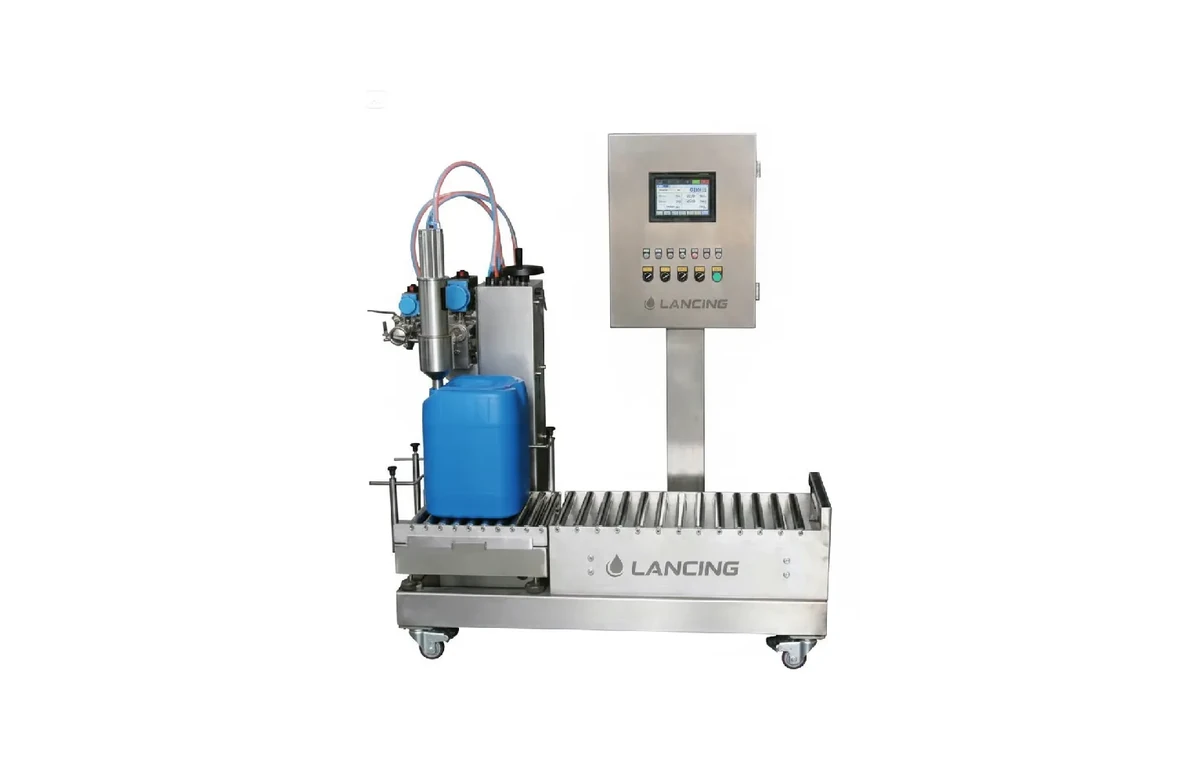
Send your SDS, pack sample, closure and target output so the filling and capping route can be checked before quotation.
What to check
These checks help separate a useful chemical filling machine enquiry from a generic web search.
Confirm viscosity, foaming, corrosiveness, flammability, fumes, solids and cleaning needs before choosing a filler.
Neck size, stability, cap style, label position and pack material can change the machine route.
Hourly target, batch size and operator availability decide whether semi-automatic or automatic equipment is practical.
Wetted materials, hoses, seals, pumps and nozzles should be reviewed against SDS data and product samples.
Capping torque, cap feeding, coding, labelling and conveyor handling should be planned with filling, not after it.
Air, power, space, ATEX/DSEAR requirements, ventilation and manual handling affect the final layout and quote.
Quote details
| Detail | Why it matters |
|---|---|
| Product name and SDS | Identifies chemical compatibility, flammability, corrosiveness and handling requirements. |
| Fill volume range | Sets dosing method, pump size, nozzle selection and changeover approach. |
| Container sample or drawing | Confirms neck access, stability, cap style, label position and handling method. |
| Output target | Separates manual, semi-automatic, compact automatic and multi-head filling options. |
| Accuracy and giveaway target | Determines whether volumetric, gravimetric, flowmeter, pump or piston filling should be considered. |
| Line scope | Confirms whether filling only, fill-cap, or complete fill-cap-label-convey integration is required. |
Common questions
Yes. The more precise the SDS, product behaviour, fill range, container, closure and output information, the easier it is to recommend a suitable route.
Send the SDS, product sample where possible, container and closure samples, fill range, output target, site notes and any capping or labelling requirements.
Yes. For chemical products it is often better to review filling, cap torque, spillage control, labelling and conveyors as one line.
Next steps
Use these pages to compare the product, pack, closure and automation choices before sending your enquiry.
Compare core filling machine options.
Browse product, pack, closure and buyer routes.
Send your details for advice.
Send an enquiry
Send your product, container, closure and target output. We will suggest a practical route for filling, capping and line integration.
Acceptance-test boundary
Factory acceptance testing should verify the supplied machine or line under documented conditions before dispatch. Site utilities, extraction, bonding/earthing, building interfaces, floor levels, operator procedures and final line integration require separate site acceptance evidence. Agree both protocols early enough to influence design and sample planning.
FAT protocol structure
The protocol should identify the machine configuration, approved product, sample batches, recipes, test instruments, people attending, safety arrangements and handling of deviations. Include the lowest and highest fills, significant container/closure formats and the conditions most likely to expose foam, corrosion, drips, aeration, stringing or instability.
| FAT section | Questions to agree | Record to retain |
|---|---|---|
| Document and configuration review | Are drawings, BOM/materials, utilities, software, safety functions, manuals and scope aligned to the approved order? | Document register, machine identification, software/recipe versions and open-item list |
| Product and sample verification | Are product batch, SDS, temperature, containers, closures and labels representative and sufficient? | Sample identification, quantities, condition, tolerances and photographs |
| Filling performance | How are target, tolerance, sample size, instrument, timing and result calculated? | Individual measurements, settings, environmental/product conditions and exceptions |
| Clean cut-off and pack condition | Are drips, stringing, foam, splash, neck residue and external cleanliness acceptable? | Inspection results, images/video where agreed and corrective settings |
| Container and closure handling | Does every approved pack feed, locate, cap and discharge without damage or ambiguous status? | Format/change-part list, torque/seal results, rejects and interventions |
| Fault and safety tests | What happens on missing pack, blocked discharge, low product, air/power loss, E-stop and specified permissive failure? | Witnessed test sheet, alarm text, reset/restart sequence and unresolved actions |
| Changeover and cleaning | Can the agreed product path be drained, flushed, stripped or exchanged safely within the stated method? | Time, tools, retained product, flush/waste, access, restart checks and operator notes |
| Timed run | What duration, format, replenishment and quality checks define sustained good output? | Good packs, rejects, stops, interventions, downtime categories and calculated result |
Measurement discipline
State whether fill is assessed by mass, volume, level or another measure. Identify tare treatment, density/temperature conversion, instrument resolution and calibration status. Record individual results as well as averages where the requirement concerns every pack. If a percentage tolerance is used, define the denominator and whether the result applies across the whole fill range.
For output, state the product, fill, format, test duration and included operator tasks. Count acceptable finished packs at the agreed point. Replenishment, short stops, rejects and planned interventions should be recorded, not hidden by resetting the test whenever the line pauses.
Calculate enough product and components for setup, repeatability, low/high fill, faults, timed run, changeover and cleaning. Agree safe transport, storage, PPE, extraction, spill response and return/disposal. Do not send hazardous samples without prior written arrangements.
From FAT to SAT
List anything the factory could not reproduce: final bulk-feed pressure, building extraction, site earthing, long conveyor interfaces, production data connection, ambient temperature or specific operator procedure. SAT should verify these items against the installed system. Record configuration changes made after FAT and assess whether they require repeat testing.
Agree product, formats, tests, instruments and criteria before FAT.
Capture actual results, settings, deviations and action ownership.
Retest factory actions or transfer justified site-dependent items into SAT.
Confirm site utilities, interfaces, safety, training and production handover.
Complete-line testing
This checklist concentrates on chemical filler evidence. Where the project includes container handling, capping, labelling, coding, inspection, accumulation and end-of-line equipment, use the detailed Packaging Lines UK FAT and SAT guide to coordinate the whole production line.
FAT FAQ
It may support initial setup, but it does not prove chemistry, foam, viscosity, cut-off, compatibility or cleaning. If a substitute is necessary, document which risks remain untested and how they will be closed.
Long enough to expose the agreed replenishment, micro-stop and operator cycle for the duty. There is no universal duration; state the basis and what is included or excluded.
Record the deviation, impact, corrective action, owner and whether the affected test must be repeated. Do not rely on an unrecorded verbal agreement.
Test formats that represent the limits and material differences of the approved range. The protocol should justify any grouping and identify untested configurations.
Only if the requirement is explicitly based on an average and individual results remain within any applicable limit. Record individual measurements so variation is visible.
Not where installed utilities, interfaces, safety systems, layout or site procedures remain to be verified. FAT cannot prove conditions that did not exist at the factory.
Named authorised representatives should sign against the approved protocol, noting accepted exceptions and open actions. Signature responsibilities should be agreed in the contract or test plan.
Acceptance planning
Issue the protocol, sample plan, measurement method, safety arrangements and action process in advance.
Finished-pack challenges
A filler can cycle correctly while the production pack remains under target, overfilled, externally contaminated or poorly sealed. The FAT protocol should state which checks are performed at the factory, which depend on site equipment and which must be repeated after installation.
Define reference measurement, container or tare treatment, product condition, sample sequence, target, tolerance and adjustment response.
Use production containers, closures and liners; record neck cleanliness, closure application, seal or leak checks and timing after capping.
List simulated conditions, deferred interfaces, open actions, final documents and the SAT evidence needed before production release.
FAT protocol
Record the test method, sample, measurement, expected result, actual result, deviation and owner.