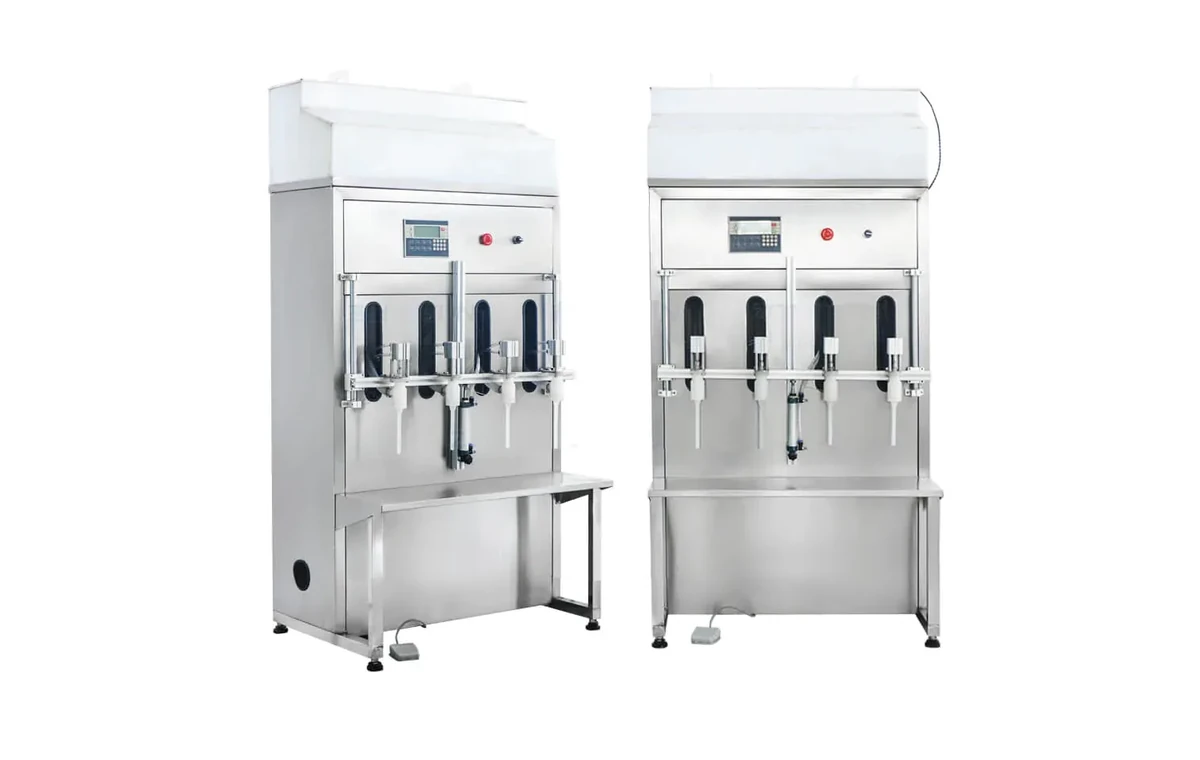
Automatic anti-corrosion filling
For repeated production where a conveyor-fed, multi-head system can be built around compatible product-contact materials.
Read moreAnti-corrosion filling
Corrosive liquid filling projects are driven by wetted material compatibility. The pump, valves, nozzles, hoses, seals, tank, frame environment and cleaning method must be reviewed before a machine style is selected.
Specification
A corrosive filler should not be specified from fill volume alone. A liquid that attacks one seal, hose or valve material may be perfectly manageable with another, so product data and compatibility history are central to the brief.
Choose your equipment
Choose equipment from product compatibility and container handling.
For repeated production where a conveyor-fed, multi-head system can be built around compatible product-contact materials.
Read more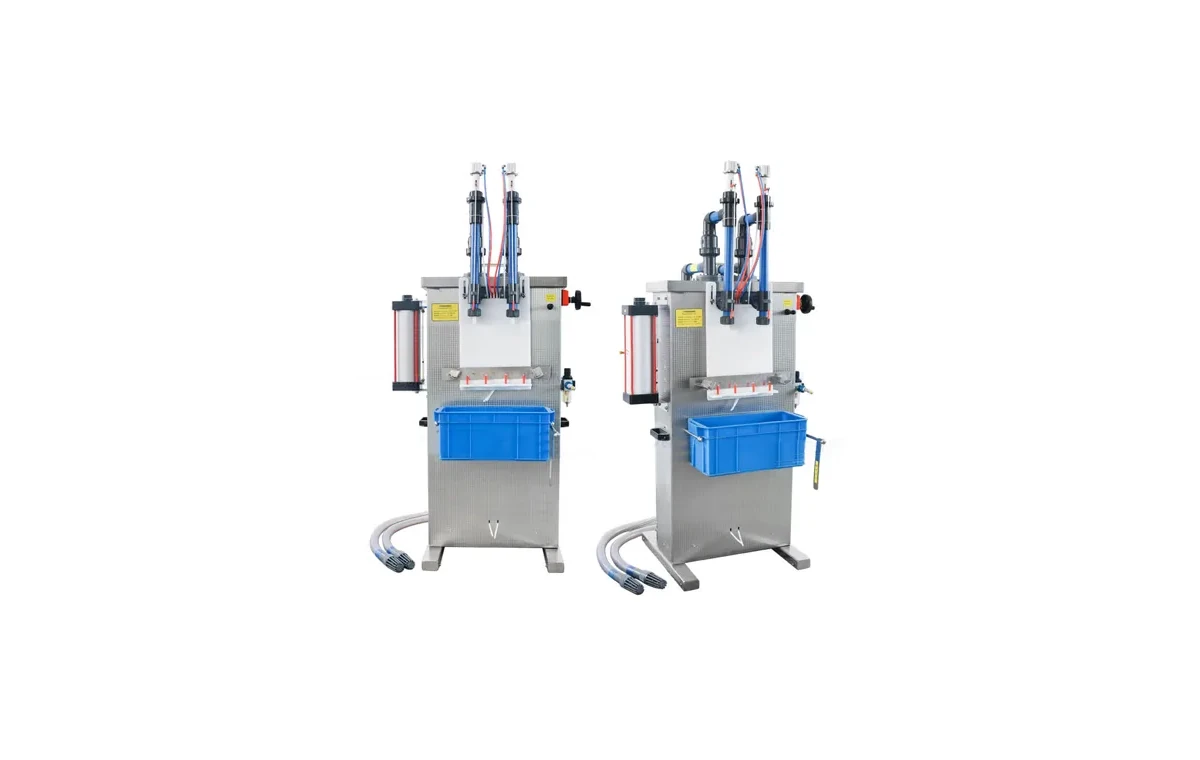
For shorter batches or growing production where controlled dosing is needed but full automation is not yet justified.
Read more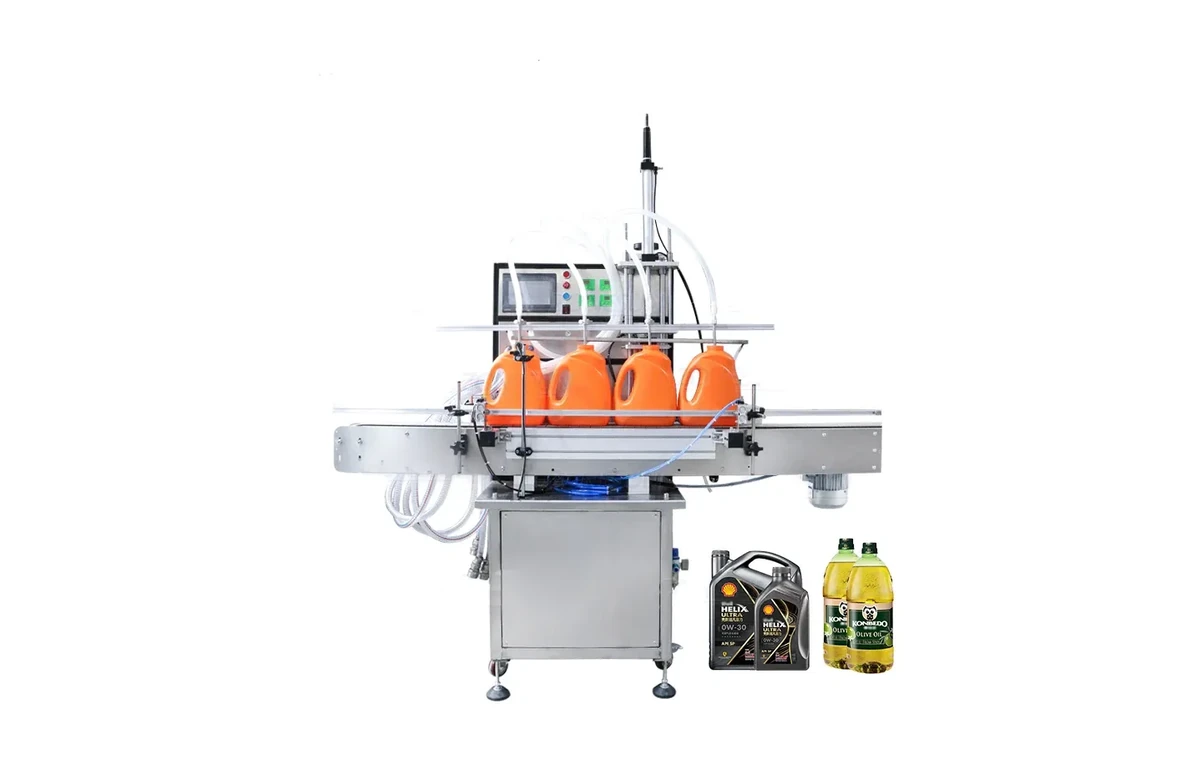
For foaming cleaning products that may also need corrosion-aware materials and controlled fill profiles.
Read more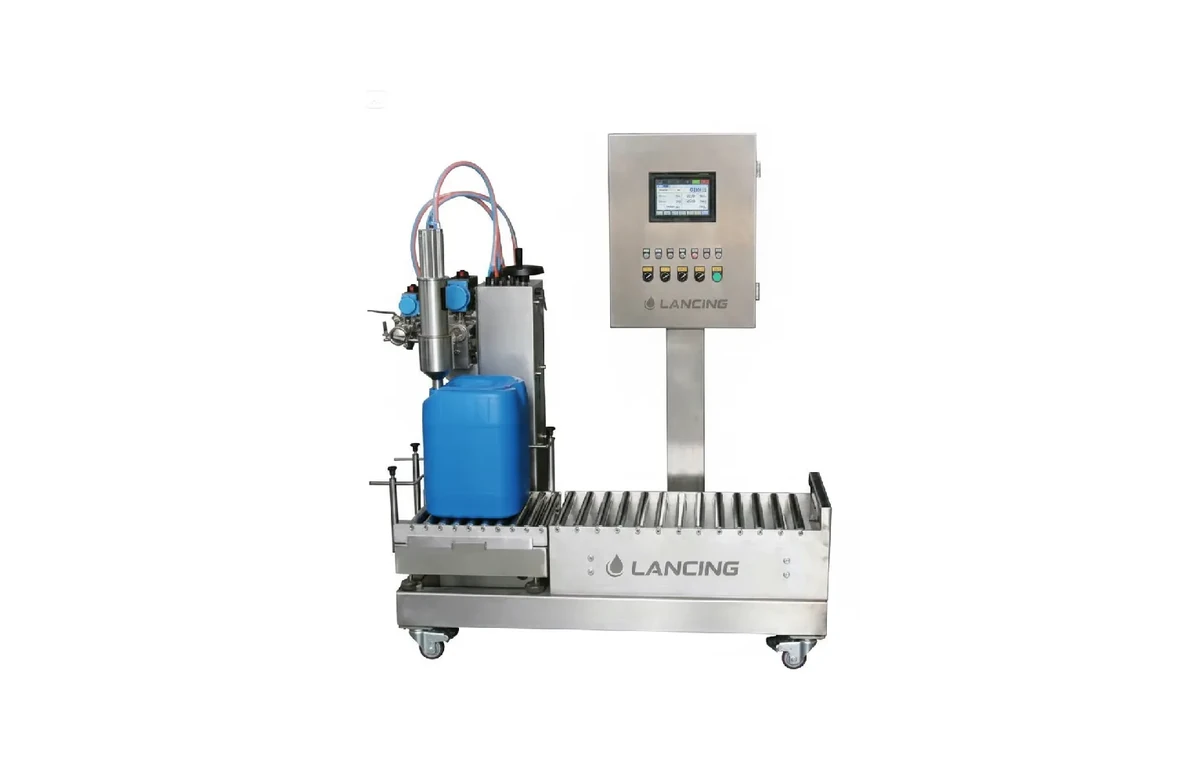
For larger chemical containers where weight control, drip control and operator ergonomics need attention.
Read moreComparison
| Detail | Why it matters | Example |
|---|---|---|
| Chemical family | Identifies likely compatibility risks | Acid, alkali, bleach, fertiliser, descaler |
| Known compatible materials | Avoids unsuitable wetted parts | PP, PVC, PTFE, specific elastomers |
| Fill size | Determines pump and container handling | 250ml bottle to 25L jerrycan |
| Foaming or fumes | Affects nozzle, extraction and fill profile | Diving nozzle, slower fill, environment review |
| Closure style | Leak control depends on cap and seal | Screw cap, trigger, pump, induction seal |
Note
For aggressive liquids, an enquiry is stronger when it includes the SDS, concentration, temperature, fill volume, target output and any materials already proven in the production process.
FAQ
Materials depend on the liquid. Projects may use selected plastics, hoses, seals and non-metal wetted parts, but the correct choice should be confirmed against the product data.
Yes, bleach-based products are a common reason to review anti-corrosion filling options, but concentration and compatibility details are still needed.
Yes. Automatic anti-corrosion options can be considered when the product, container, closure and production volume justify conveyor-fed filling.
Speak to Lancing
Send the product, fill volume, container, closure and target output. Include SDS and compatibility notes where relevant.
Compatibility qualification
A corrosive liquid filling machine may include product tanks, pumps, diaphragms, pistons, valves, seals, hoses, fittings, manifolds, nozzles, level devices and drainage parts. Each component can use several materials and may experience different temperature, pressure, movement and exposure time. A safe selection therefore follows the complete product path and records who has approved each item for the actual formulation.
| Contact area | Materials or routes that may be reviewed | Approval questions |
|---|---|---|
| Rigid wetted parts | 316 stainless steel, PTFE, polypropylene, polyethylene, PVC or other engineered plastics where appropriate | Exact chemical and concentration, temperature, contaminants, stress, welds/joints, exposure time and cleaning fluid |
| Dynamic seals and valve seats | PTFE compounds and project-selected elastomers such as EPDM, FKM or NBR | Supplier grade, swelling, hardening, permeation, movement, pressure, temperature and replacement interval |
| Flexible hoses and peristaltic tubing | PTFE-lined hose, compatible thermoplastic or elastomeric tube | Inner-layer chemistry, reinforcement, bend radius, fatigue, occlusion, pressure/vacuum and connection method |
| Pump and meter | Diaphragm, peristaltic, piston, gear, lobe, magnetic-drive or compatible flow/weight route | All internal materials, dry-running, solids, viscosity, shear, pressure, leakage mode, drainage and calibration |
| Nozzle and shut-off | Compatible plastic or metal construction with positive shut-off, anti-drip or diving action as required | Cut-off, stringing, splash, neck clearance, submerged filling, retained volume and safe parking |
This is a qualification matrix, not a universal compatibility chart. Material names alone do not approve a component. Written supplier confirmation and representative product testing should be used where the formulation or duty is uncertain.
Corrosion-proof machine route
A chemically compatible product path still has to meter accurately and shut off cleanly. Review suction lift, pump priming, entrained air, product temperature, flow restriction, pressure and the effect of long or narrow hoses. For foamy or splash-prone products, a diving nozzle or reduced initial flow may be necessary; for stringing products, positive shut-off and nozzle parking may be more important than headline speed.
Lancing’s published LUYTCR2 semi-automatic corrosion-proof filler is a fully pneumatic two-head, plastic-contact reference platform with a published 200–1000 ml range. It illustrates one route for compatible corrosive products. It does not establish suitability for every acid, bleach, alkali or cleaning formulation, so the final wetted materials, seals and hoses must be confirmed before order.
Specify whether the product path will be flushed, displaced, drained, stripped or changed as a dedicated set. Confirm the cleaning chemical, concentration, temperature and contact time as part of the same compatibility review. Provide safe collection for displaced product and rinse fluid, and avoid unplanned dead legs that trap aggressive liquid between campaigns.
Containment and maintenance
Corrosive service can turn a minor leak into rapid damage. Position joints, hoses and pump seals where they can be inspected without dismantling unrelated equipment. Use drip trays or bunding that are themselves compatible, and define how a leak is detected, isolated and cleaned. The spares list should distinguish routine wear parts from chemistry-critical components and identify the exact grade or manufacturer reference rather than a generic description such as “rubber seal”.
List every product-contact and cleaning-fluid-contact component from source to nozzle.
Record exact grades, supplier evidence, limits and any trial still required.
Test priming, repeat fills, cut-off, pauses, low/high dose and container changes.
Define inspection, replacement, safe drainage, spares and response to leakage.
Corrosive filler FAQ
No material should be treated as universally suitable. Exact grade, fillers, temperature, pressure, mechanical duty, permeation and the complete formulation must be checked with the component supplier.
No. The correct route depends on chemistry and mechanical duty. Some formulations suit selected stainless grades; others require non-metallic contact parts. Strength, temperature, cleanliness, static and maintenance requirements also matter.
Only after both duties are approved. A seal that tolerates the product may be affected by an alkaline, acidic or solvent cleaning fluid, especially at a higher temperature.
Review positive shut-off, pump response, suck-back where suitable, hose elasticity, nozzle geometry, diving movement, product head and the pause between fills. The chosen method must not compromise compatibility or dose repeatability.
Check hoses, joints, seals, valves, nozzle seats, trays, guards, sensors and any signs of swelling, discolouration, cracking, deposits or leakage. Inspection frequency should follow duty, supplier guidance and operating experience.
A representative sample is strongly useful where foam, cut-off, viscosity or compatibility is uncertain. Agree handling, return/disposal, test conditions and the acceptance evidence before sending hazardous material.
Compatibility-led enquiry
Include the SDS, concentration, temperature, fill range, containers, cleaning fluid and known material restrictions.
Materials screening matrix
The table below is a project-screening framework, not a chemical-resistance recommendation. Names such as PTFE, polypropylene, HDPE, PVDF, 316 stainless steel, EPDM or FKM describe material families; grade, formulation, concentration, temperature, pressure, mechanical stress, exposure time and cleaning chemistry can change performance. Approval should cover the complete assembled component and be supported by current supplier data, operating experience or a controlled test with the exact product.
| Wetted element | Candidate families that may be investigated | Questions before approval | Evidence to retain |
|---|---|---|---|
| Rigid tanks, manifolds and valves | Selected grades of 316 stainless steel, polypropylene, HDPE, PVDF, PTFE/PFA or other engineered materials | General corrosion, local attack, stress cracking, temperature, pressure, fabrication joints, permeation and cleanability | Exact material grade, construction drawing, supplier statement and product/cleaner exposure basis |
| Seals, diaphragms and valve seats | PTFE-based constructions and selected elastomers such as EPDM, FKM or specialist compounds | Swelling, hardening, compression set, extraction, temperature, cycling, pressure and compatibility with both product and cleaning fluid | Compound identification, service limits, inspection interval and test or field history |
| Hoses and flexible tubing | PTFE/PFA, selected thermoplastics, elastomeric tubing or composite hose constructions | Inner liner and reinforcement, permeation, vacuum collapse, pressure, bend radius, fatigue, end fittings, static behaviour and replacement life | Full hose specification, fitting materials, routing, pressure basis and planned replacement record |
| Pumps and meters | Diaphragm, peristaltic, magnetic-drive, flow-meter or positive-displacement routes with suitable internal materials | Every internal wetted part, seals, bearings or bushings, dry-running, solids, shear, pressure, suction conditions, drainage and calibration behaviour | Component bill, curve or operating window, compatibility basis and representative product trial |
| Nozzles and shut-off parts | Compatible plastics, fluoropolymers, selected metals and seal-less or isolated actuation arrangements | Drip, stringing, crystallisation, splash, nozzle contact, dead volume, dismantling and safe parking between batches | Nozzle drawing, material list, fill-profile settings and witnessed cut-off/cleaning result |
Do not infer compatibility from the frame material or the pump body alone. The smallest seal, fitting, sensor pocket or hose liner can determine the service life of the complete product path.
Approval record
Record each wetted component by manufacturer, part number, exact material or compound, product and cleaning exposure, temperature range and expected duty. Identify whether acceptance is based on supplier data, existing plant experience, immersion screening, a dynamic product trial or another competent review. An immersion coupon can reveal visible attack or swelling, but it may not reproduce pressure, flexing, permeation, fatigue, compression or trapped product in an assembled machine.
The record should also define inspection and replacement criteria. Predictable hose, tube or seal replacement can be an acceptable maintenance strategy when it is deliberate, accessible and supported by safe isolation and drainage. Unrecorded degradation inside a pump or valve is not.
Related technical evidence
Open the wetted-parts guide for the full product-path method and the chemical filler compatibility checklist for the information to record. The general chemical filling machine comparison explains how the approved contact path is combined with dosing, pack handling and acceptance testing.
Compatibility approval
Material-family names are not enough to approve a corrosive-liquid filler. Exact grades, compounds, fillers, adhesives, hose constructions, seal geometry, fabrication, temperature, exposure time, concentration, impurities and cleaning fluids can all change performance. The compatibility record should follow the liquid from the bulk source to the nozzle and include components that see vapour, splash or retained product.
| Component group | Failure modes to consider | Approval evidence |
|---|---|---|
| Rigid tanks, manifolds and fittings | Corrosion, stress cracking, permeation, swelling, contamination, poor weld or joint resistance | Exact material and construction, supplier guidance, exposure conditions and trial or written approval where needed |
| Pumps and meters | Seal attack, dry running, crystallisation, blocked clearances, loss of calibration, trapped product | Manufacturer review for product and cleaning duty, minimum-flow and shutdown method, accessible inspection points |
| Hoses and tubing | Softening, embrittlement, permeation, delamination, fatigue at bends or pump occlusion | Hose construction, pressure/temperature duty, replacement interval and inspection criteria |
| Seals, diaphragms and valve seats | Swelling, compression set, cracking, leakage, sticking or particle generation | Exact elastomer or polymer grade, duty cycle, cleaning exposure and spare strategy |
| Nozzles and shut-off parts | Drip, stringing, crystallised deposits, splash, contaminated necks and unsafe retained volume | Representative fill, pause and drain-down trial with inspection after cleaning |
| Non-wetted surrounding parts | Damage from vapour, mist, splash or cleaning chemicals | Containment review, enclosure and guarding materials, spill route and maintenance access |
HSE notes that a safety data sheet helps an employer make a risk assessment but is not the assessment itself. The same caution applies to material selection: use the SDS as an input, then obtain project-specific approval for the complete duty. See HSE safety data sheet guidance.
Lifecycle control
Changes to formulation, concentration, raw-material supplier, temperature, cleaning agent, hose, seal, pump, storage time or maintenance method may invalidate an earlier decision. Use the chemical filling management-of-change guide to record the trigger, technical review, trial and release decision.
Corrosive-liquid project
Include the current SDS, concentration range, temperature, cleaning fluids and any known material failures.
Corrosive-product questions
These answers are written for early project definition. Final machine suitability depends on the actual formulation, packs, site conditions and representative testing.
Approval should identify every product-contact component by function and exact material or grade, then record the product, concentration, temperature, pressure, exposure time, cleaning fluids and mechanical duty considered. A broad statement such as “PTFE contact parts” or “316 stainless steel” is not a complete path approval.
Include hoses, seals, valve seats, pump internals, meters, fittings, adhesives, coatings and nozzle parts. Record who supplied the compatibility evidence, its limitations, any trial or soak evidence and the inspection or replacement criteria after production begins.
Cleaning can expose seals, hoses and retained-product areas to a different chemistry, concentration or temperature from normal production. A component that performs acceptably with the filled product may swell, harden, crack or lose strength when exposed to a solvent, alkali or acid cleaning step.
Review product, rinse, detergent, neutralising fluid and any sterilising or flushing medium as one duty cycle. Include dwell time, temperature, pressure, drain-down and whether components are cleaned assembled or removed.
Crystallising products require attention to dead legs, valve cavities, nozzle seats, hose low points, drainability and the time allowed before flushing. A small retained volume can dry or cool into a deposit that changes valve closure, scratches seals, blocks a sensing path or creates contamination at the next start.
Define the maximum hold time, shutdown sequence, flush route, safe collection method and inspection points. A representative trial should include stopping, waiting and restarting—not only continuous filling from a freshly mixed batch.
A dedicated path is often preferable when cleaning cannot be objectively verified, products react with one another, material requirements conflict, residue limits are very low, or dismantling a shared path would create repeated operator exposure. Dedicated does not automatically mean fixed machinery; a validated changeable hose, pump or dosing set may sometimes provide a clearer boundary.
Compare the cleaning evidence, retained volume, replacement cost, changeover frequency and risk of an incorrect reconnection before selecting the arrangement.
Speak to Lancing
Include current product and cleaning information, operating temperature, supply conditions, pack samples and the inspection evidence expected after commissioning.
Compatibility through the machine lifecycle
A corrosive-liquid filler can become unsuitable after handover if a replacement seal, hose, tube, valve seat or pump component is supplied in a different material or grade. The approval record should therefore identify the exact installed component, its chemical duty, the evidence used and the condition that triggers inspection or replacement.
| Component group | Approval evidence | Condition to inspect | Replacement control |
|---|---|---|---|
| Hoses and flexible tubing | Exact polymer, reinforcement, bore, temperature and cleaning exposure | Swelling, softening, cracking, discolouration, loss of flexibility, permeation or connection movement | Use the approved part reference or review the substitute through compatibility change control. |
| Seals, diaphragms and valve seats | Compound, grade, duty cycle and contact with product and cleaning fluids | Compression set, leakage, sticking, surface attack, dimensional change or increased fill variation | Record batch/part identity and verify cut-off and repeatability after replacement. |
| Pumps, meters and valves | Full contact-material schedule, not only the casing material | Loss of output, abnormal noise, seizure, erosion, corrosion, internal leakage or unstable dosing | Confirm every replacement wetted component and re-run the agreed quantity and leak checks. |
| Nozzles and fittings | Body, tip, internal shut-off, spring, seat, gasket and connector materials | Drips, stringing, splash, restricted flow, poor alignment, damaged threads or product traps | Restore the approved geometry and verify the smallest and largest agreed container. |
No generic table can approve PTFE, polypropylene, HDPE, 316 stainless steel or an elastomer for every chemical. Concentration, temperature, additives, exposure time, pressure, mechanical stress and cleaning chemistry can change the result. Use supplier data and representative testing for the exact formulation and installed component.
Link the compatibility file to the critical spares register so a maintenance purchase cannot silently change the product path. The verified model examples show how published contact-path information differs between machine routes.
Containment compatibility
Corrosive-product approval should extend beyond the pump, hose and nozzle. Drip trays, sumps, liners, floor finishes, seals around penetrations, collection vessels and any temporary transfer equipment can also contact the product or cleaning fluid. A containment system that is the right size but made from an incompatible material is not an adequate control.
Routine nozzle drips may be collected close to the filling point, while a hose failure, overfill, damaged container or bulk-transfer release can extend beyond the machine frame. Define the credible release cases, the route to a controlled collection point, how contaminated liquid is identified and removed, and how the area is restored before production restarts.
Use the secondary-containment and bunding guide to record the boundary between machine-mounted trays, process-area containment, drainage and the wider site system.