Use suitable check equipment
Identify the scale, measure or other reference, its capacity, resolution, status and pre-use check. Do not use an uncontrolled domestic instrument for production release.
Quantity-control evidence
Define what is calibrated, what is independently checked and how production performance is verified after setup, changeover or maintenance.
Direct answer
A chemical filling project should identify the instrument or function being calibrated, the independent reference used, the acceptable uncertainty or tolerance, and the conditions of the check. Production verification then challenges the actual product, container, head, recipe and operating state.
The machine setting, independent measurement and packaged-quantity control method are related but not interchangeable. Final legal and quality obligations remain with the packer and should be confirmed for the product and market.
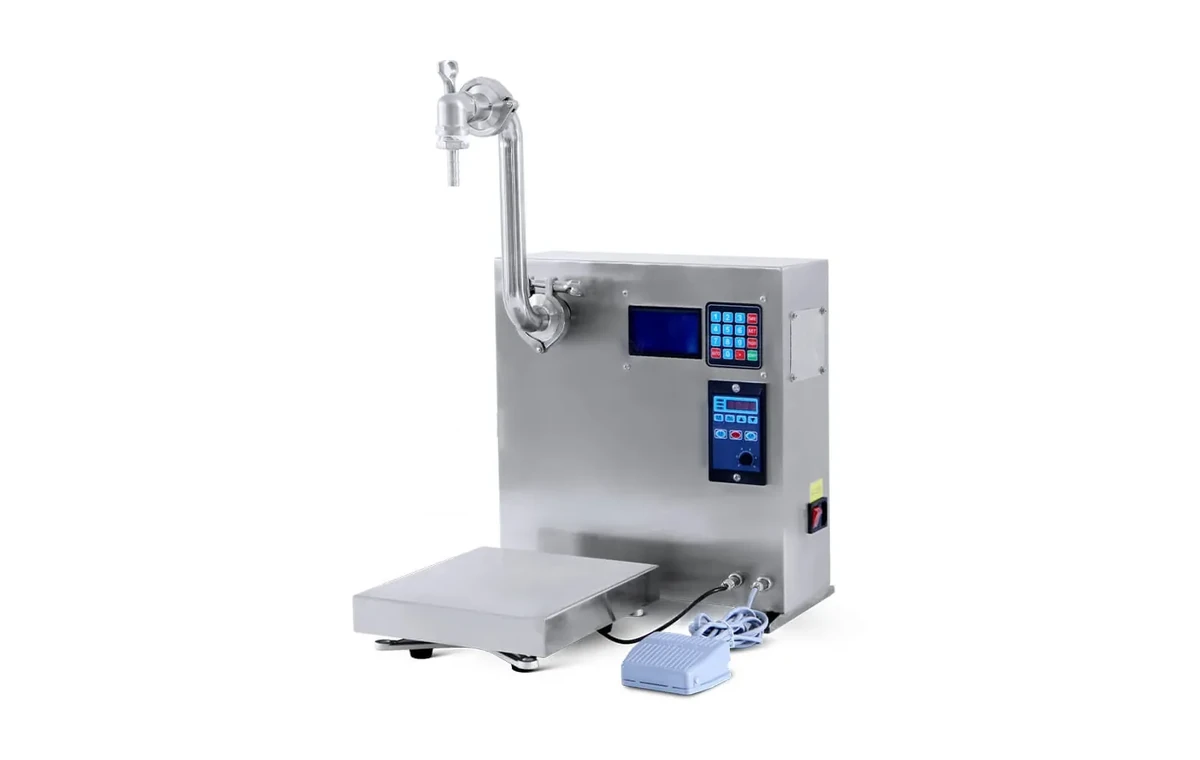
Record the product batch, temperature, density where relevant, pack tare, machine recipe, head, supply condition, reference equipment and measurement timing.
Verification plan
| State | Reason for the challenge | Evidence to retain |
|---|---|---|
| Smallest and largest agreed dose | Different pump, cylinder, tube or valve behaviour can appear at opposite ends of the range. | Individual results by head, settings, cycle time and accepted tolerance. |
| Every filling head or channel | A combined average can hide one biased tube, cylinder, nozzle or channel. | Head identity, repeated results and any correction applied. |
| Full, normal and approved low supply condition | Head pressure, suction, prime and trapped air can change as the source level moves. | Source level, pressure/flow state and quantity result. |
| Start and restart after a representative pause | Drain-back, evaporation, bubbles or valve position can affect the first packs. | First-pack sequence and time required to regain stable production. |
| After tube, seal, pump, valve, nozzle or software work | Maintenance can alter displacement, cut-off, leakage or configuration. | Parts changed, restored settings, checks repeated and release approval. |
| Worst credible production product condition | Temperature, viscosity, density and foam may move within the approved formulation range. | Product condition and evidence that the process remains within the agreed envelope. |
Measurement discipline
Identify the scale, measure or other reference, its capacity, resolution, status and pre-use check. Do not use an uncontrolled domestic instrument for production release.
Use individual tare, a controlled average or another justified method that reflects the real container variation.
When volume is inferred from weight, state the density source, product temperature and calculation rather than assuming a fixed relationship.
Foam collapse, drainage, evaporation and product retained on the neck can change the apparent result over time.
Define the sample or 100% check, acceptance rules, action limits, response to drift and retained records.
Identify who reviews the evidence after adjustment, maintenance, software restore or material substitution.
UK packaged goods
GOV.UK explains the minimum and average systems for packaged goods, including the packer’s responsibility, suitable checking equipment and records. Review the current packaged-goods guidance and equipment and records guidance, then seek Trading Standards or competent advice for the specific business method.
Buyer questions
No. Entering a set point configures the machine. Calibration or verification requires a defined reference, method, conditions and result.
Yes where heads or channels can behave independently. A combined average can hide one biased head.
Density, temperature, tare, foam, evaporation and measurement timing can all affect the comparison.
Use the site quality plan and risk assessment. Common triggers include product or pack change, tube/seal/nozzle replacement, pump or valve work, software restore, abnormal drift and relocation.
No. FAT demonstrates the agreed factory conditions. Routine production still needs the packer’s approved monitoring and response method.
Speak to Lancing
Send the declared fill, tolerance, product condition, pack range, reference equipment and production quantity-control method.