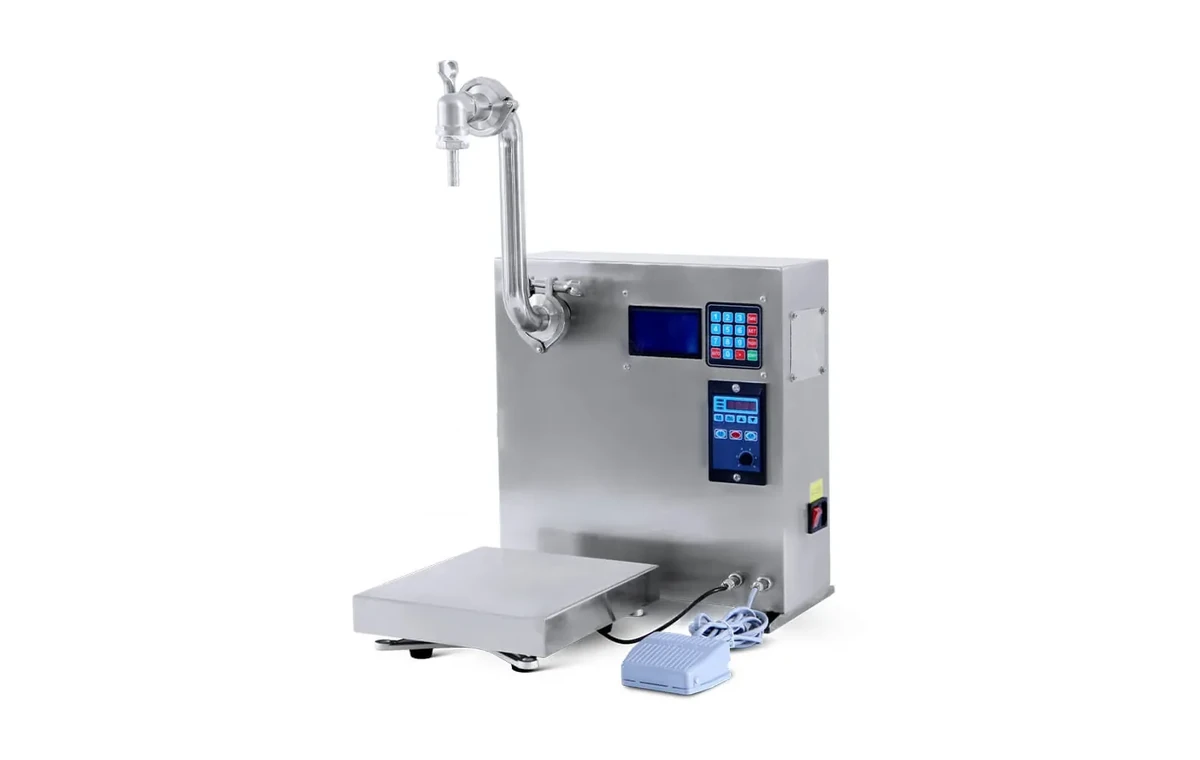
Semi-auto jerrycan filling
Operator-presented containers with controlled filling for varied products and smaller batches.
Read moreLarge-container filling
Larger chemical containers change the filling discussion. Output is still important, but weight control, operator ergonomics, container positioning, drip control and safe handling often matter just as much.
Specification
A 25L container is not just a larger bottle. It changes how the operator presents the pack, how the nozzle enters the opening, how drips are controlled, how the container is capped and how full packs leave the filling area.
Choose your equipment
The best choice depends on fill size, liquid behaviour and operator involvement.
Operator-presented containers with controlled filling for varied products and smaller batches.
Read more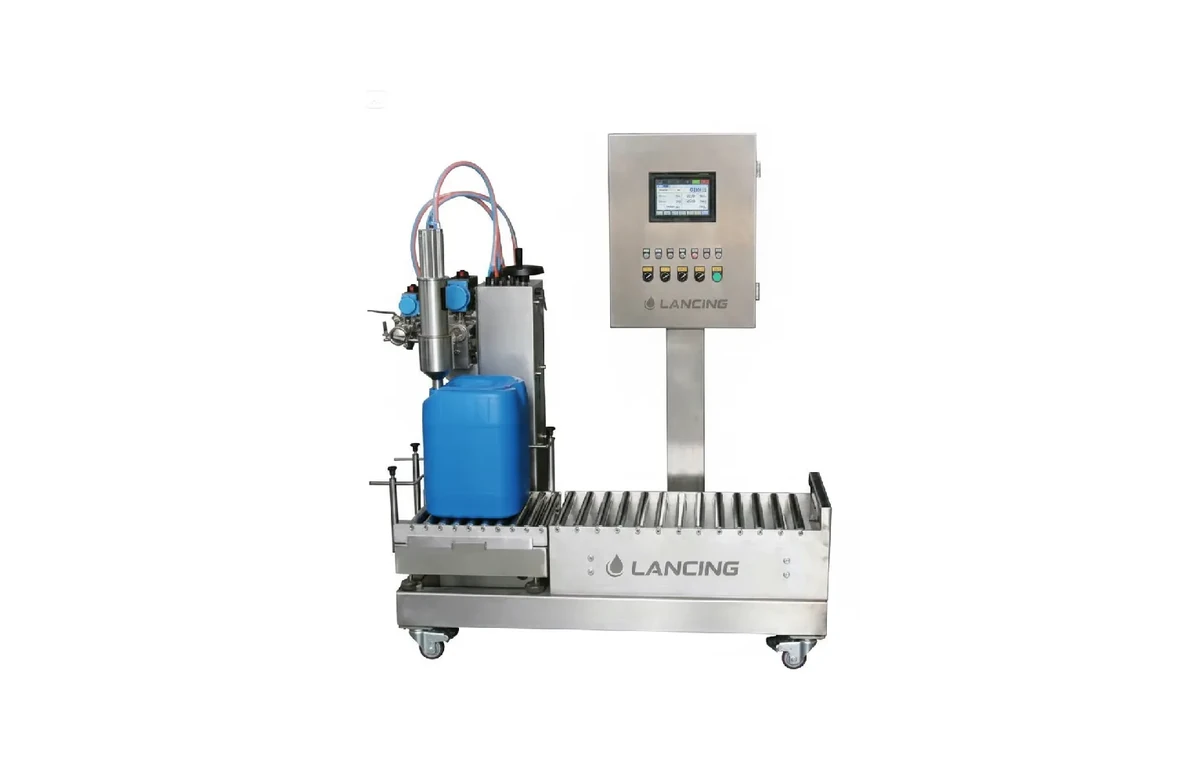
Conveyor-fed large-container filling where output and repeatability justify line automation.
Read more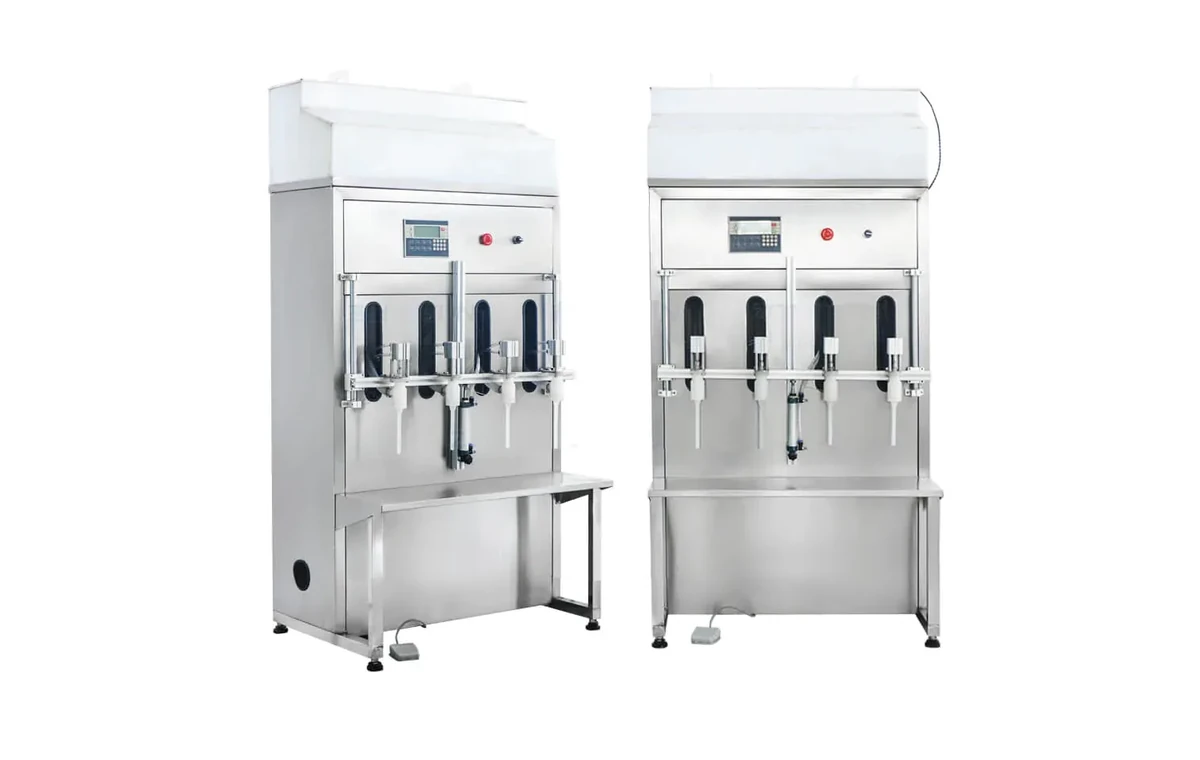
Options for acids, bleach and aggressive products where material compatibility and spillage control are critical.
Read more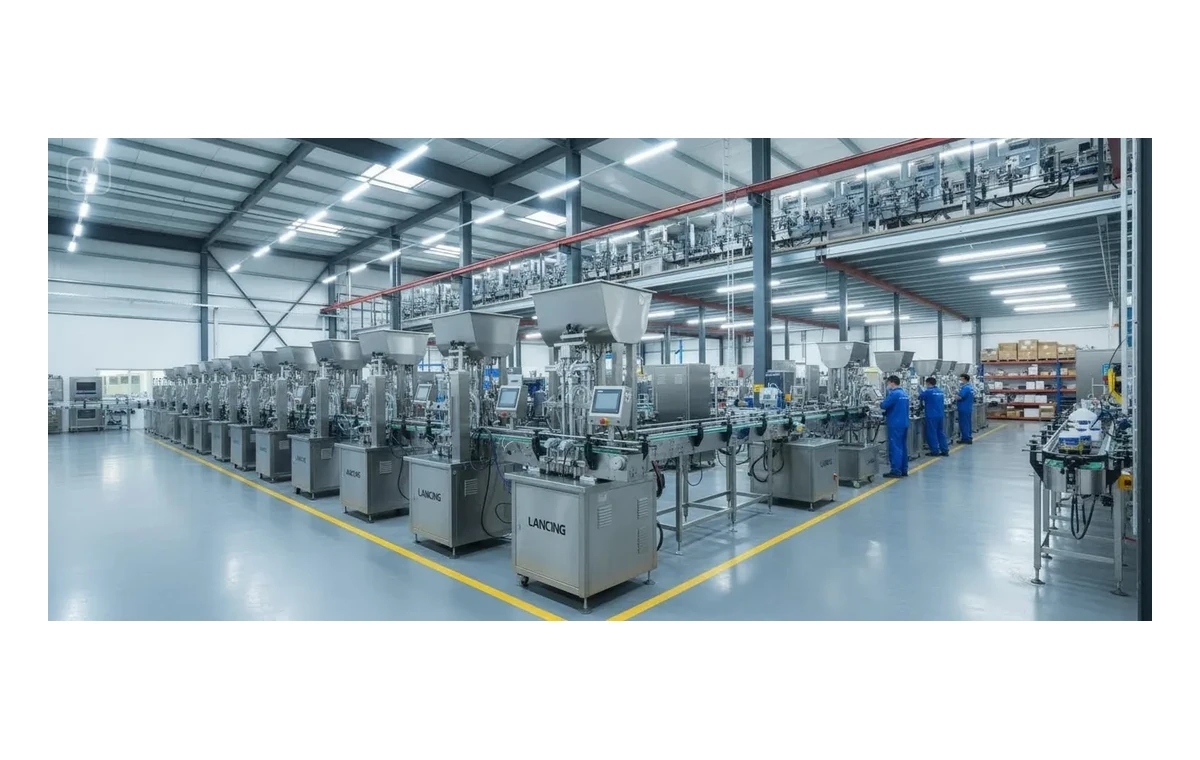
Filling, capping, labelling and conveyors planned around heavy or awkward containers.
Read moreComparison
| Input | Example | Why it matters |
|---|---|---|
| Container size | 5L, 10L, 20L, 25L, pail, drum | Determines fill control, lifting and conveyor requirements |
| Fill accuracy | By volume or weight | Determines dosing principle and weighing needs |
| Product flow | Thin, foamy, viscous, corrosive | Selects pump, nozzle and shut-off method |
| Closure | Screw cap, bung, lid, plug | Affects closing equipment and operator sequence |
| Full-pack handling | Manual, conveyor, palletising | Shapes layout and ergonomics |
Process
How are jerrycans, pails or drums loaded into the filling position?
Plan how full containers will move after filling before finalising the filler.
Large-container capping or lidding can become the bottleneck.
A line for 5L and 25L packs may need more adjustment than expected.
FAQ
Yes. 25L jerrycan projects normally need careful review of fill control, container handling, cap handling and operator ergonomics.
It depends on the product, accuracy requirement, container tolerance and production process. Weight filling is common for larger containers but should be specified from the project brief.
Some drum filling projects can be automated, but the best choice depends on drum handling, fill volume, product behaviour, site layout and safety requirements.
Speak to Lancing
Send the product, fill volume, container, closure and target output. Include SDS and compatibility notes where relevant.
Large-container engineering
Jerrycans, pails and drums create a different handling problem from small bottles. The empty pack may vary in tare, the neck may be offset, and the filled container can be too heavy for repeated manual lifting. Nozzle travel, platform size, conveyor transfer, cap application and spill containment should be considered before the dosing method is selected.
Weigh filling can be attractive for larger packs because the scale controls the delivered mass and can account for a tared container. Volumetric or flow routes may still be suitable where product properties and commercial requirements support them. Define whether the target is net mass, volume at a stated temperature or another legal/commercial measure, and agree how density and tare variation will be handled.
Lancing’s published LUGTW2S platform uses twin diving heads, weighing and a gear feed pump for a published 5–30 litre range. It is a reference route for compatible detergents, oils and industrial liquids. Final pump, materials, output and accuracy must be established with the actual product, pack and test method.
Controlled fill profile
A large-volume fill may begin quickly and then change to a slower top-off before the target. The transition point, valve response, pump stop and product remaining in the nozzle all affect the final result. A diving nozzle can reduce foam and splash, but its movement must remain clear of handles, moulded necks and unstable containers. Test low and high fill formats, low bulk level and a restart after pause.
| Risk | Design response to assess | Acceptance evidence |
|---|---|---|
| Tare variation | Individual tare, stored tare or gross-fill method | Measured net fills across representative empty containers |
| Foam or splash | Diving nozzle, staged flow, neck location and venting | External cleanliness, foam height, settled result and cycle time |
| Heavy finished pack | Roller/conveyor transfer, powered discharge or lifting aid | Operator task review and stable movement without impact or spillage |
| Overfill after pump stop | Valve position, hose length, cut-off compensation and drain-back control | Repeat fills at different bulk levels and pause durations |
| Container misplacement | Guides, stops, presence check and nozzle permissive | Safe no-container/no-fill response and recovery test |
Jerrycan and drum FAQ
It can be a strong route, but scale capacity, tare method, vibration, product feed and calibration all affect performance. Accuracy must be defined and tested under the agreed conditions.
Manual lance filling may suit some duties, but exposure, static, ergonomic load, splash, repeatability and interlocks require assessment. A supported or automatic nozzle is often preferable for repeat work.
Options range from manual torque-controlled tools to semi-automatic or automatic cappers. The cap, neck finish, handle position, container stiffness and required torque/seal evidence determine the route.
Possibly, if the platform, nozzle travel, metering range and handling method cover both. Large differences may justify dedicated change parts, recipes or separate stations.
Use real packs and product, test tare variation, staged flow, no-container/no-fill, pause/restart, overfill protection, nozzle movement, capping and movement of the filled pack.
Large-pack project
Send the container drawings, empty/filled mass, fill target, product, cap, presentation method, output and available floor layout.
Large-pack acceptance schedule
Large-container performance depends on more than the final scale reading. The factory test should include pack presentation, tare or zero handling, nozzle entry, staged filling, cut-off, drip control, cap or lid handling and safe movement of the finished pack. Test criteria should state the product, container population, measurement method, number of observations and how rejected or interrupted cycles are treated.
| Test condition | Why it is included | Result to record |
|---|---|---|
| Representative empty-pack population | Shows tare, moulding, neck and stability variation rather than one selected container | Empty mass range, location success, nozzle clearance and accepted tare method |
| Minimum and maximum fill | Checks the control window, top-off stage, scale resolution or meter behaviour and recipe change | Target, measured result, settings, cycle sequence and any change parts |
| Low bulk level or realistic feed condition | Exposes suction, pressure, aeration or flow changes that may not appear from a full test vessel | Supply condition, fill result, cut-off behaviour and alarms or permissives |
| Pause and restart | Checks drainage, loss of prime, nozzle retention and the first pack after a normal interruption | Pause duration, first-pack result, recovery steps and rejection rule |
| Misaligned or absent container | Verifies no-container/no-fill logic and safe nozzle movement | Sensor response, prevented motion or fill, alarm, reset and recovery |
| Foam, splash and overrun | Confirms the staged profile and product remaining in hose/nozzle after shut-off | Foam height, external cleanliness, settled result, cut-off and spill capture |
| Closure and finished-pack movement | Ensures the heavy pack can be closed and discharged without impact, squeeze or spillage | Cap/lid result, operator task, conveyor or roller transfer and stable discharge |
Workstation and containment
Define how empty packs arrive, how the operator locates an offset neck and how a filled container leaves the scale or platform. Guides and stops must allow the agreed formats while keeping handles, closures and moulded features clear of the nozzle. Where manual tasks remain, review reach, repetition, filled mass, floor condition and the handling of a rejected or partly filled pack.
Containment should be accessible for inspection and recovery without compromising the weighing platform or hiding a leak. Agree whether drips return to product, go to a segregated vessel or become waste, and ensure the route is compatible with every product and cleaning liquid in scope.
Acceptance evidence
The chemical filler FAT questions help define the evidence, while the complete chemical line page covers conveyor, capping and downstream interfaces. For the initial machine comparison, return to chemical filling machine selection.
Large-pack control
Jerrycans, pails and drums create different risks from small bottles. Empty-pack variation, handle position, pallet presentation, nozzle reach, filled weight and the method used to remove the pack can affect both measurement and operator safety. A large-pack filler should be trialled with the actual container family and the intended upstream and downstream handling.
| Control point | Project decision | Acceptance evidence |
|---|---|---|
| Tare or empty-pack variation | Gross, net or volumetric control; individual tare or representative tare policy | Measured empty-pack population and documented calculation or weighing method |
| Coarse and fine flow | Valve, pump or nozzle stages needed to reach target without excessive overshoot | Smallest and largest approved fill, low supply condition and repeat restart |
| Nozzle reach | Top fill, diving fill or lance arrangement for foam, splash and vapour control | Representative pack trial with clearance, lift and cut-off recorded |
| Pack location | Manual guide, scale platform, roller conveyor, pallet position or powered handling | Stable location and removal with the heaviest filled pack |
| Closure and seal | Manual or assisted cap placement, torque, bung, liner or tamper evidence | Completed pack checks after realistic handling and dwell |
| Spill and waste route | Drip tray, bund, drain, recovery vessel and cleaning method | Compatible containment and documented response to nozzle or pack fault |
For sealed packaged goods within the relevant size range, UK quantity-control duties may apply. Review current GOV.UK packaged-goods guidance and obtain Trading Standards advice for the site’s specific system.
Net-content evidence
The fill quantity control and overfill guide explains how the filler, reference measurement, sampling, target setting and production records fit together. Pack closure and leak evidence is covered in the chemical pack integrity guide.
Large-container project
Include container samples, tare information, closure method, pallet or conveyor arrangement and the site’s quantity check.
Large-pack questions
These answers are written for early project definition. Final machine suitability depends on the actual formulation, packs, site conditions and representative testing.
A volumetric dose can be repeatable in litres while the net mass changes with density. That matters when product is sold, controlled or reconciled by weight, and it can also indicate changes in temperature, aeration or formulation. Define whether the declared quantity and acceptance method are by volume or mass.
Where packaged-goods rules apply, the packer remains responsible for the quantity-control system and records. Machine testing should reproduce the measurement method used in production.
Weigh filling should distinguish the empty container and any pallet, lid, handle or fixture from the product quantity. Tare variation can be controlled by individual tare, representative tare grouping or another approved method, depending on the process and required evidence.
Test empty packs from across the supply tolerance, damaged or nested packs where relevant, scale zero recovery and the effect of hoses or nozzles touching the container during measurement.
The control sequence should prevent an unidentified part-filled container from entering normal finished-pack flow. Define how the condition is detected, how the container is segregated, whether it may be safely reworked and what record or operator authorisation is needed.
Challenge power loss, emergency stop, low product, nozzle fault and manual removal during FAT and SAT. The recovery method must not create an uncontrolled second dose.
Acceptance should cover the actual closure sequence, vent or bung arrangement, tools, torque or seating evidence, wipe-down, labelling and movement of the filled container. A correct fill is not an accepted pack if the closure cannot be applied safely or the container cannot be removed without splash, strain or damage.
Use production pallets, handling aids and representative maximum filled mass during the test, with a competent site review of manual-handling and lifting arrangements.
Speak to Lancing
Send pack and pallet samples, tare range, target quantity, closure tools, handling method, containment and the quantity-control evidence required.
Large-pack quantity evidence
Jerrycans, pails and drums can show meaningful variation in empty-container mass, rigidity and presentation. A weigh-based system may control net quantity directly when correctly configured, while a volumetric or flow-based route may need density and temperature to be understood before a weight check is compared with a volume declaration.
| Challenge | Why it matters | Evidence to record |
|---|---|---|
| Empty-pack tare range | Container mass variation can hide or exaggerate product quantity when gross weight is used. | Individual or controlled tare method, pack supplier/batch and representative minimum/maximum empties. |
| Product density and temperature | Weight-to-volume conversion changes with actual density and temperature. | Measurement method, sample condition and the value used for the declared quantity calculation. |
| Coarse/fine fill transition | Late cut-off or unstable flow can increase overshoot and product give-away. | Set points, valve/nozzle state, final settling time and repeatability at low and high supply conditions. |
| Container position and nozzle reach | Misalignment, handle interference or flex can affect splash, sensing and finished-pack movement. | Actual production containers, worst-tolerance samples and accepted operator or conveyor sequence. |
| Restart and low-level condition | Pump prime, head pressure and trapped air can change after stops or near the end of a batch. | First pack after restart, final packs from the approved low-level condition and any required purge. |
The calibration and verification guide explains how to separate the machine setting, reference measurement and production quantity-control process. For packaged goods within the relevant statutory scope, the packer should confirm the applicable UK requirements and record-keeping method with competent advice or Trading Standards.
Large-pack release control
A large-pack filling station can release product at the supply connection, nozzle, container opening, closure step or during movement of the finished pack. The site brief should therefore distinguish close-coupled drip collection from the wider secondary-containment, floor, drainage and emergency-response system.
Check whether a damaged jerrycan, pail, drum or IBC can be isolated without crossing an uncontrolled drain or blocking operator escape. Define how a leaking filled pack is removed, where contaminated pallets or rollers are cleaned, and how the collection system is inspected before the next campaign.
Use the secondary-containment and bunding guide to assign machine, floor, site and waste responsibilities.