Can one failure stop the line?
Prioritise parts with no safe workaround or that prevent the process from meeting quantity, containment or pack-integrity requirements.
Lifecycle support
Identify the replacement parts, compatible materials, stock decisions and return-to-service checks needed to protect a chemical filling line from avoidable downtime and unsafe substitutions.
Direct answer
The register should not be a generic list of catalogue components. It should state the installed part reference, material or compound, machine location, chemical duty, failure consequence, stock decision, storage requirement and the check required after replacement.
For chemical filling machinery, inexpensive wetted seals, hoses or tubes may be more critical than larger assemblies if an unapproved substitute changes compatibility or stops the line.
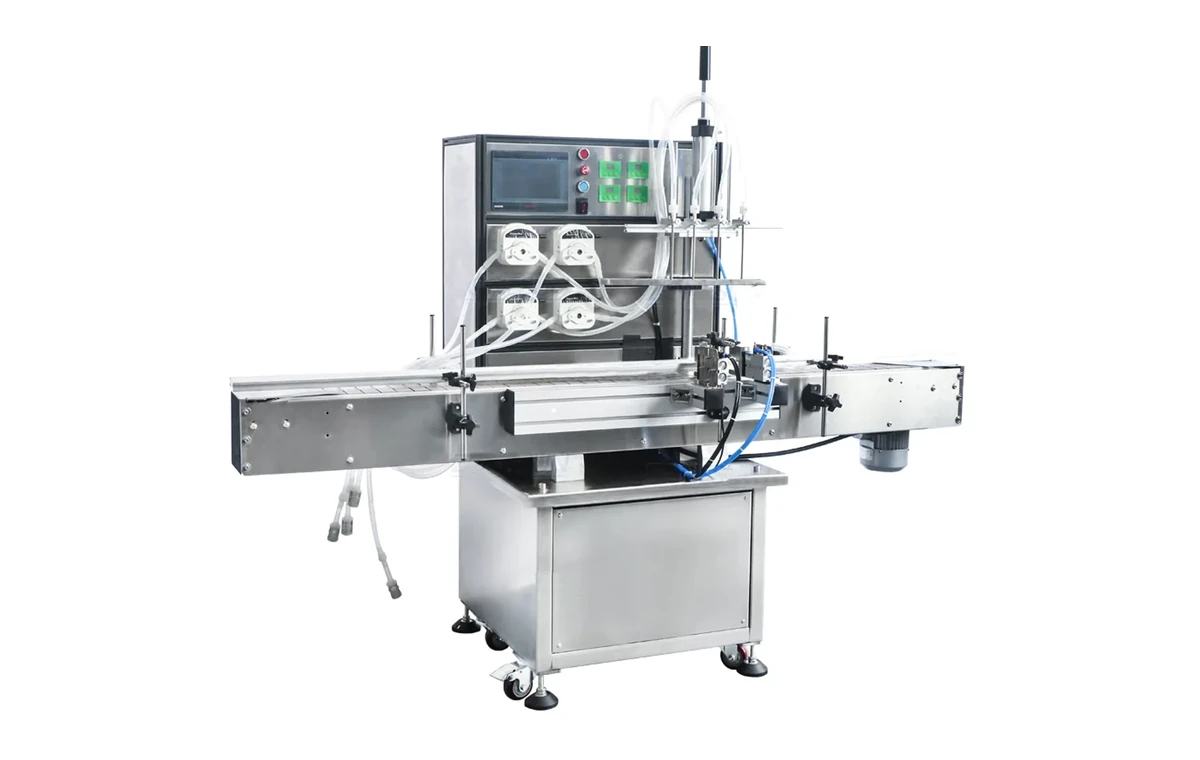
Record tube material, bore, wall, length and routing; seal compound; pump and valve internals; and every wetted nozzle component needed to restore the accepted configuration.
Register structure
| Spare group | Information to record | Return-to-service evidence |
|---|---|---|
| Wetted seals, O-rings, diaphragms and valve seats | Exact compound/grade, geometry, duty, shelf-life or storage information and approved supplier reference | Leak, cut-off, prime and quantity check with the approved product or justified test medium. |
| Hoses, tubing and connectors | Inner material, reinforcement, bore, wall, length, routing, fitting and chemical/cleaning exposure | Installation inspection, priming, channel balance, leak test and verification of retained/drained product behaviour. |
| Pump, meter, valve and nozzle components | All wetted materials, service kit content, orientation, settings and replacement tools | Flow/quantity, cut-off, drip, foam, splash and smallest/largest pack challenge. |
| Container and closure format parts | Guide, star, chuck, gripper, belt, cap tooling, drawing/revision and approved pack range | Container stability, cap application, torque/integrity, label presentation and reject challenge. |
| Sensors, safety devices and actuators | Part identity, range/rating, safety relevance, software parameter and proof-test method | Function test, simulated fault, safe state and confirmation that the correct pack is rejected. |
| Controls, recipes and software backups | PLC/HMI/drive versions, programme backup, recipe set, passwords/access ownership and restore media | Controlled restore, I/O/function check, settings comparison and authorised production release. |
Stock decision
Prioritise parts with no safe workaround or that prevent the process from meeting quantity, containment or pack-integrity requirements.
Consider manufacture, shipping, obsolescence and whether the part is configured or machined for the specific line.
Use observed condition and actual duty to set stock, not an invented universal replacement interval.
Control storage environment, shelf-life, seals and packaging so a stocked elastomer or tube remains usable.
Review material, rating, geometry, software and safety function before accepting an alternative.
Link every critical part to the relevant leak, quantity, closure, safety, reject or line-recovery test.
Compatibility caution
PTFE, polypropylene, HDPE, stainless steel, EPDM, FKM and other families contain grades and constructions with different chemical and mechanical behaviour. Record the exact approved component and review any substitute against product concentration, temperature, pressure, movement, cleaning and exposure time.
Maintenance handover
Speak to Lancing
Send the machine reference, products, maintenance concern and any existing parts list. Lancing can identify the information needed to confirm compatible replacements and support scope.