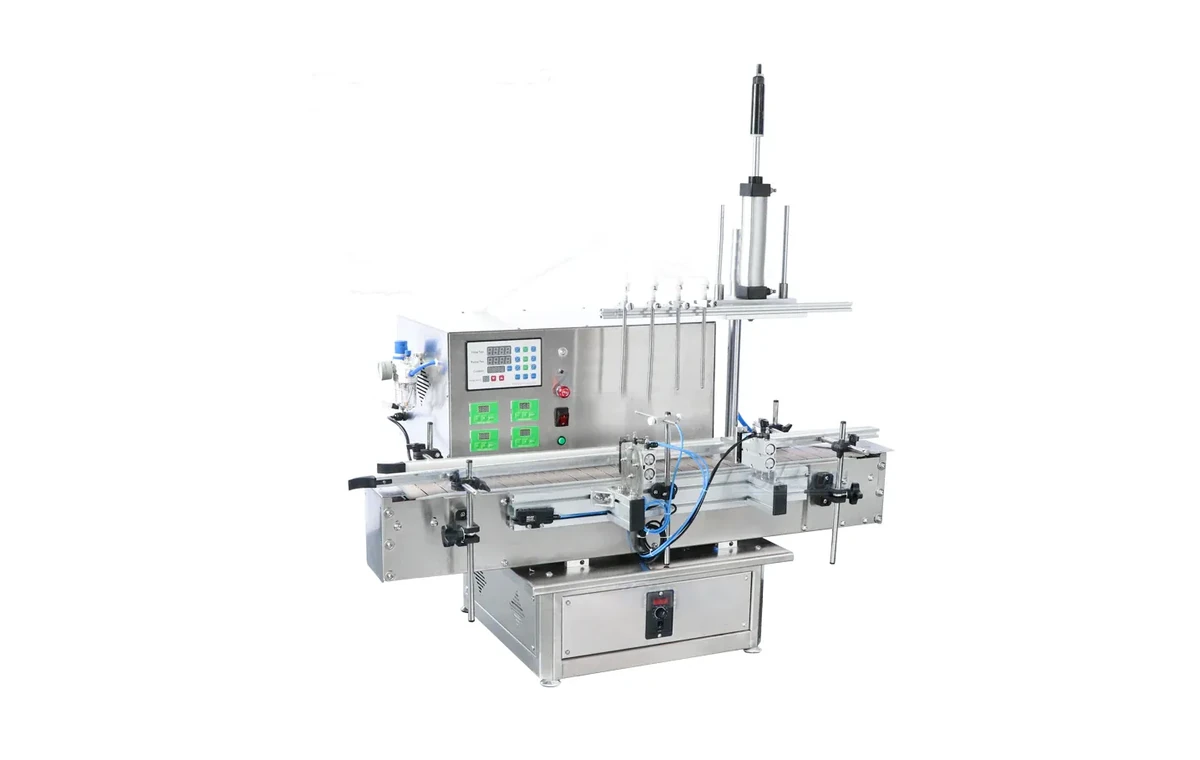
Bench or tabletop fillers
Compact options for smaller bottles, samples and controlled batch filling where space is limited.
Read moreSemi-automatic fillers
Semi-automatic filling is a practical first automation step for chemical manufacturers that need better control than hand filling without committing to a full automatic line. It suits trials, smaller runs, frequent changeovers and container ranges that are still developing.
Specification
A semi-automatic chemical filler can reduce weighing errors, improve dose repeatability and remove some of the inconsistency of hand filling. It can also be easier to justify where products, closures and formats are still changing.
Choose your equipment
Use the liquid and container to choose the style of semi-automatic filler.
Compact options for smaller bottles, samples and controlled batch filling where space is limited.
Read more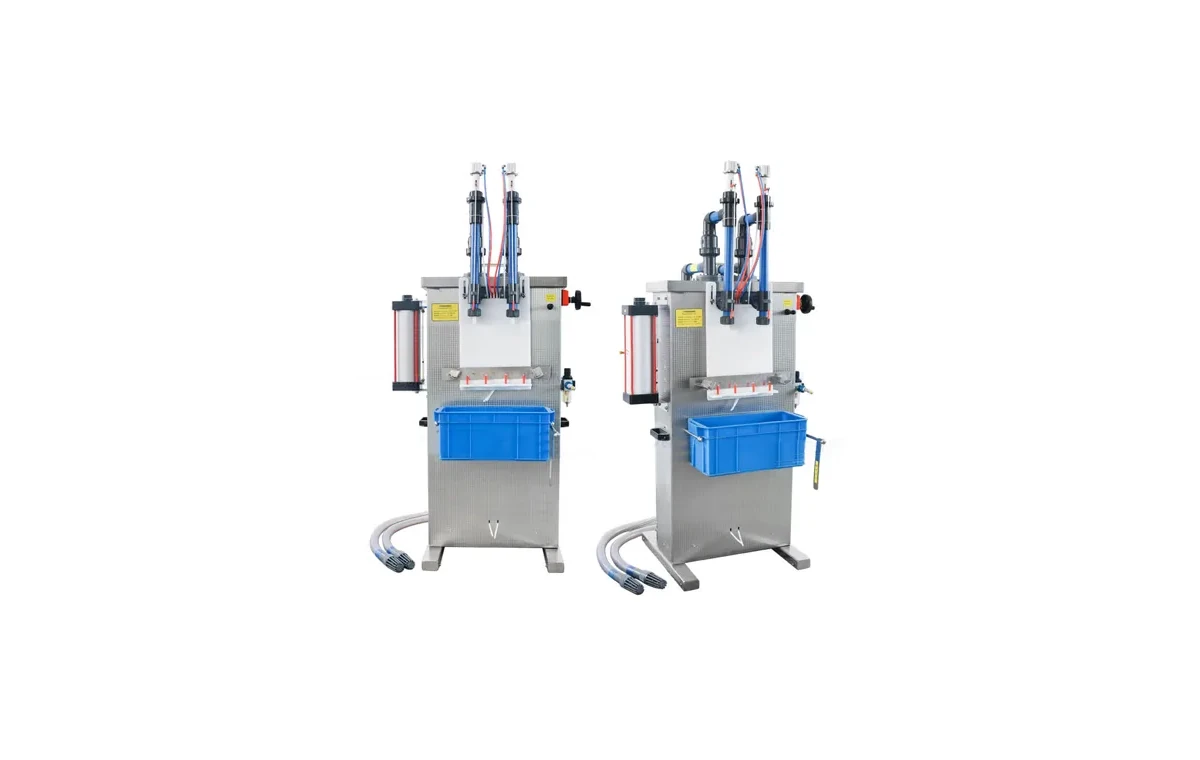
Options for aggressive liquids where contact material compatibility is central to the machine choice.
Read more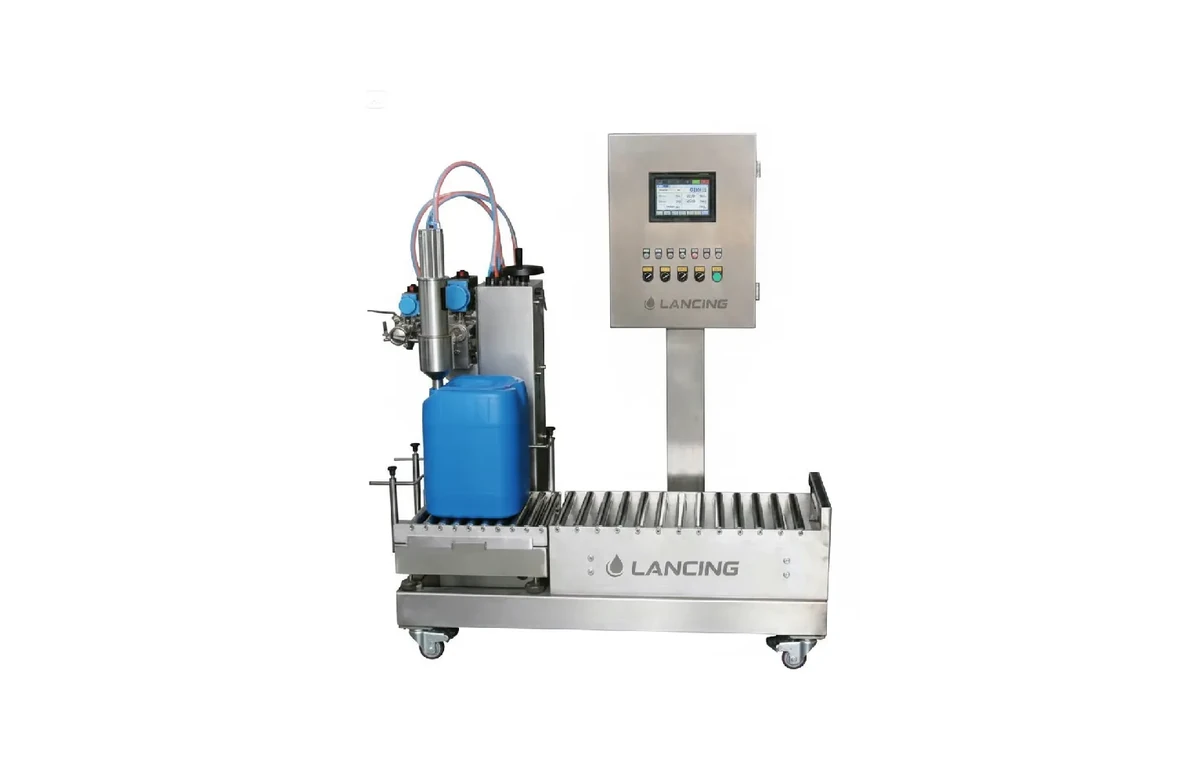
Useful for 5L to 25L packs, pails and drums where weighing and operator handling shape the layout.
Read more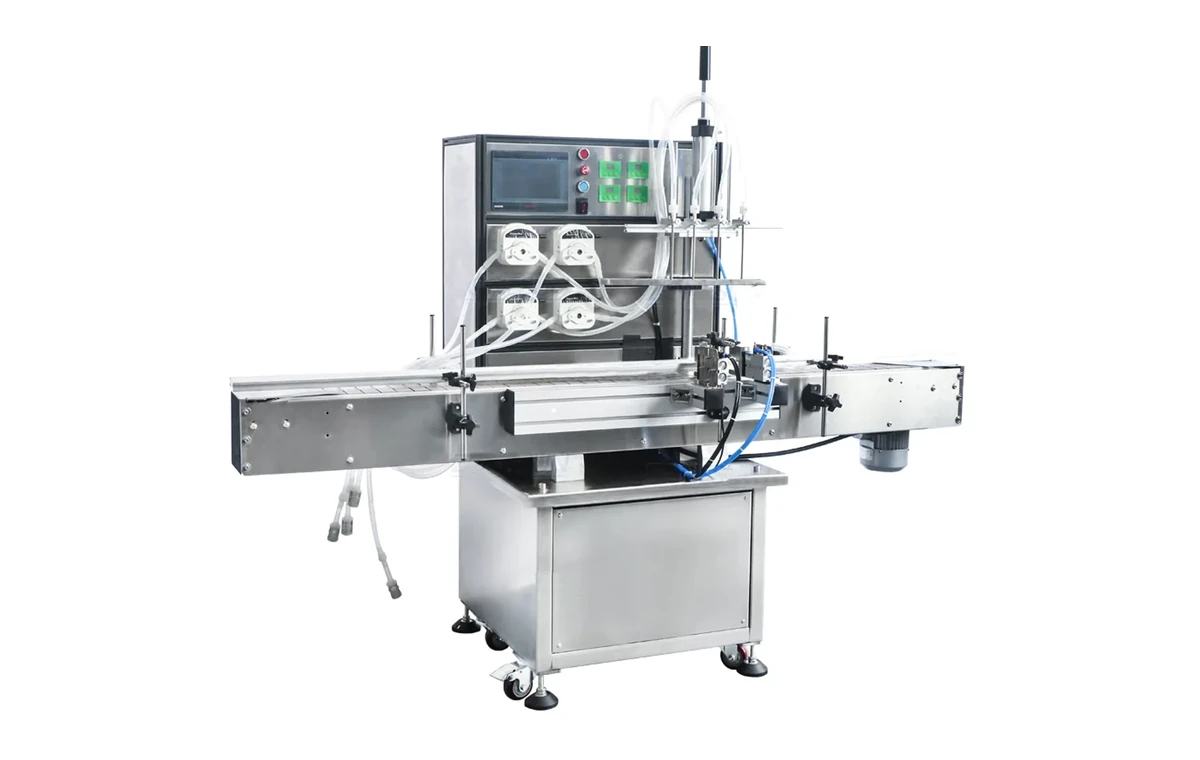
A flexible option for selected chemical liquids where tube contact, changeover speed or product isolation matters.
Read moreComparison
| Factor | Semi-automatic | Automatic |
|---|---|---|
| Output | Lower to medium output, operator paced | Higher output, conveyor paced |
| Changeover | Often easier for varied short runs | Best when formats are known and planned |
| Footprint | Usually smaller and easier to place | Needs line layout and conveyor space |
| Investment | Lower initial spend | Higher spend but reduced manual handling |
| Growth | Good first controlled step | Best for sustained production demand |
Process
Is the issue speed, accuracy, waste, spill control, operator time or consistency?
Include minimum and maximum fill volume, container dimensions and closure types.
Share SDS notes and any known materials that must or must not contact the liquid.
Decide whether the machine should be a stepping stone to full automation.
FAQ
Yes. It can be a sensible first step where the business needs controlled dosing and repeatability but still has varied products, lower volumes or developing pack formats.
Yes, depending on fill volume and handling requirements. Larger containers often need weight or pump-controlled options with suitable operator access.
Sometimes a project can be staged, but upgrade potential depends on the machine type, control system, product range and planned container formats.
Speak to Lancing
Send the product, fill volume, container, closure and target output. Include SDS and compatibility notes where relevant.
Flexible production
A semi-automatic filler can reduce manual measuring while retaining flexibility for shorter runs, frequent product changes and varied containers. The engineering question is not only how the dose is started. It is how the operator presents the pack, manages the nozzle, closes and removes the filled container, contains drips and cleans the product path without awkward or unsafe handling.
Measure the whole work cycle: pick and place, tare if required, initiate fill, wait for cut-off, inspect, cap, move the pack and recover from a misaligned container. A machine that doses quickly can still produce low or inconsistent output if the container is heavy, the neck is difficult to locate or the closure is applied elsewhere.
Published Lancing examples illustrate different routes. The LUYTCR2 is a fully pneumatic two-head plastic-contact platform with a published 200–1000 ml reference range. The LUGTW2S platform uses weighing and diving nozzles for a published 5–30 litre reference range. These figures are starting points; product compatibility, container geometry, accuracy and output must be proved for the final duty.
Changeover and growth
Document the product families, batch sizes and expected changeover frequency. Dedicated hoses, nozzles or seal sets may be preferable where compatibility or cross-contamination is difficult. Confirm how settings are retained, how a recipe is checked after cleaning and whether the filler can later feed a conveyor, capper or labeller. A planned upgrade path is more useful than assuming every semi-automatic station can be converted into a fully automatic line.
| Decision | Semi-automatic route is often useful when | Automatic review becomes important when |
|---|---|---|
| Batch pattern | Runs are short, varied or seasonal | Long runs dominate and repeated manual handling limits capacity |
| Pack range | Containers change frequently and can be presented reliably by an operator | Formats are stable enough for controlled infeed, transfer and automatic closure handling |
| Quality control | The operator can inspect each pack without slowing the required output | Automatic detection, rejection and data capture are required |
| Safety and ergonomics | Loads, exposure and repetitive tasks remain acceptable after assessment | Automation is needed to reduce exposure, lifting or repetitive operations |
Semi-automatic FAQ
Not necessarily. The machine can meter the dose while the operator loads, positions and removes the container. Define exactly which steps are manual, timed, measured or interlocked.
That depends on fill time, container weight, nozzle spacing, capping task and workstation layout. A timed ergonomic trial is more reliable than assuming two heads will double output.
Review shut-off nozzle design, suck-back where appropriate, hose or pump response, nozzle parking, drip trays and the time between fills. The solution must remain compatible with the product and cleaning method.
Only through a project-specific safety and conformity review. The product, site classification, ignition sources, ventilation, static control, containment and operator exposure all need competent assessment.
Use the real product or an agreed representative, the smallest and largest containers, closures, and enough material to test start-up, repeat fills, pauses, changeover and cleaning.
Semi-automatic shortlist
Send the product, pack sizes, batch pattern, required output, filled-container weight and cleaning method.
Operator-led production
Semi-automatic filling can provide flexible batch production, but the operator becomes part of the process. Container lifting, positioning, foot or hand controls, cap placement, wiping, checking and moving the filled pack all affect sustained output and exposure. A useful trial should reproduce the real bench height, product supply and pack weight.
| Task | Questions to resolve | Evidence |
|---|---|---|
| Present empty pack | Can every container be located repeatably without hand exposure below the nozzle? | Trial the least stable and largest approved packs with the intended support or guide |
| Start fill | Is the control positioned for a neutral working posture and protected against unintended operation? | Observed operator cycle and agreed control arrangement |
| Manage nozzle and residue | How are drips, strings, splash and contaminated necks prevented or contained? | Pause, restart and end-of-batch trial with cleaning method |
| Close and check | Is closure application manual, assisted or automatic, and how is seal quality confirmed? | Finished-pack checks using production closures and filled-pack samples |
| Move filled pack | Does filled weight, handle position or spill risk require a conveyor, roller table or lifting aid? | Manual-handling and site-layout review by the employer |
| Change product | Which parts are removed, flushed, replaced or inspected before the next batch? | Written changeover with waste route and first-off approval |
Controlled flexibility
A new formula, concentration, temperature, bottle, closure or cleaning chemical can alter compatibility, foam, cut-off and operator exposure even when the nominal fill is unchanged. Use the management-of-change guide to decide what must be reviewed and the commissioning guide when a machine or workstation is installed or moved.
Flexible batch filling
Include batch size, containers, closure task, cleaning route and available workstation space.
Operator-station questions
These answers are written for early project definition. Final machine suitability depends on the actual formulation, packs, site conditions and representative testing.
Run the complete task with the real pack, product-supply arrangement and normal batch duration: pick the empty, position it, start the fill, control drips, fit or move the closure, remove the filled pack and deal with rejects or spills. Observe reach, lift, grip, visibility, repetition and the need to hold a container during filling.
Use the heaviest or least stable pack and include replenishment, cleaning and changeover. A short demonstration with an empty bottle does not represent the production duty.
Use a proportionate combination of clear format identification, controlled recipe selection, physical setup checks, sample comparison and first-off approval. Where the consequence justifies it, sensors or keyed change parts may confirm critical features, but they should not replace a defined line-clearance and start-up check.
Record which products and packs can share the station and which require dedicated contact parts, tools or cleaning evidence.
A bench filler may be too dependent on judgement when the operator must estimate container position, stop the dose visually, compensate for variable product supply, wipe significant drips or decide whether a pack is acceptable without an objective criterion. Variation increases as shifts, fatigue and batch conditions change.
Add fixtures, controlled dosing, clear limits, interlocks or a different automation level where the critical result cannot be trained and checked reliably.
Record the product condition, source level, pack samples, dose settings, operator sequence, cycle elements, measured quantity, drips or foam, cleaning steps, changeover time and finished-pack result. Include normal interruptions and several operators where the process relies on manual presentation.
The trial should identify the allowed operating window and the actions required when a pack or result falls outside it—not only the best run achieved by an experienced demonstrator.
Speak to Lancing
Include the product and pack range, batch pattern, handling steps, source vessel, cleaning method, available utilities and the evidence needed to release the first production batch.
Repeatable operator cycle
Semi-automatic filling transfers more responsibility to the operator than an indexed automatic line. Repeatability depends on how the empty pack is presented, how the cycle is started, how the nozzle is positioned, how the filled pack is removed and how the next container is prepared.
Build the relevant items into the critical spares register and use the calibration and verification guide to define the evidence required after maintenance.