Product
Is it corrosive, flammable, foamy, viscous, abrasive, shear-sensitive or difficult to clean?
Wetted parts
Buyer guide to wetted-part choices for chemical fillers, including hoses, seals, valves, nozzles and pumps.
Buyer guide
This page is written for manufacturers comparing chemical filling machinery. It focuses on the commercial details that normally decide the specification: product behaviour, container format, closure type, target output, changeover and whether the machine is part of a wider line.
The right equipment can be simple, but the enquiry should still give enough detail for compatibility, accuracy, handling and future growth to be reviewed properly.
Specification details
The best answers are usually found by working through product, pack and output in that order.
Is it corrosive, flammable, foamy, viscous, abrasive, shear-sensitive or difficult to clean?
What are the container dimensions, neck finish, fill volume range, closure and label position?
How many containers per hour are required and how often does the line change product or pack size?
Is the requirement filling only, or filling with capping, labelling, coding, conveyors and guarding?
Example machinery
These examples show the kind of equipment areas that may need reviewing.
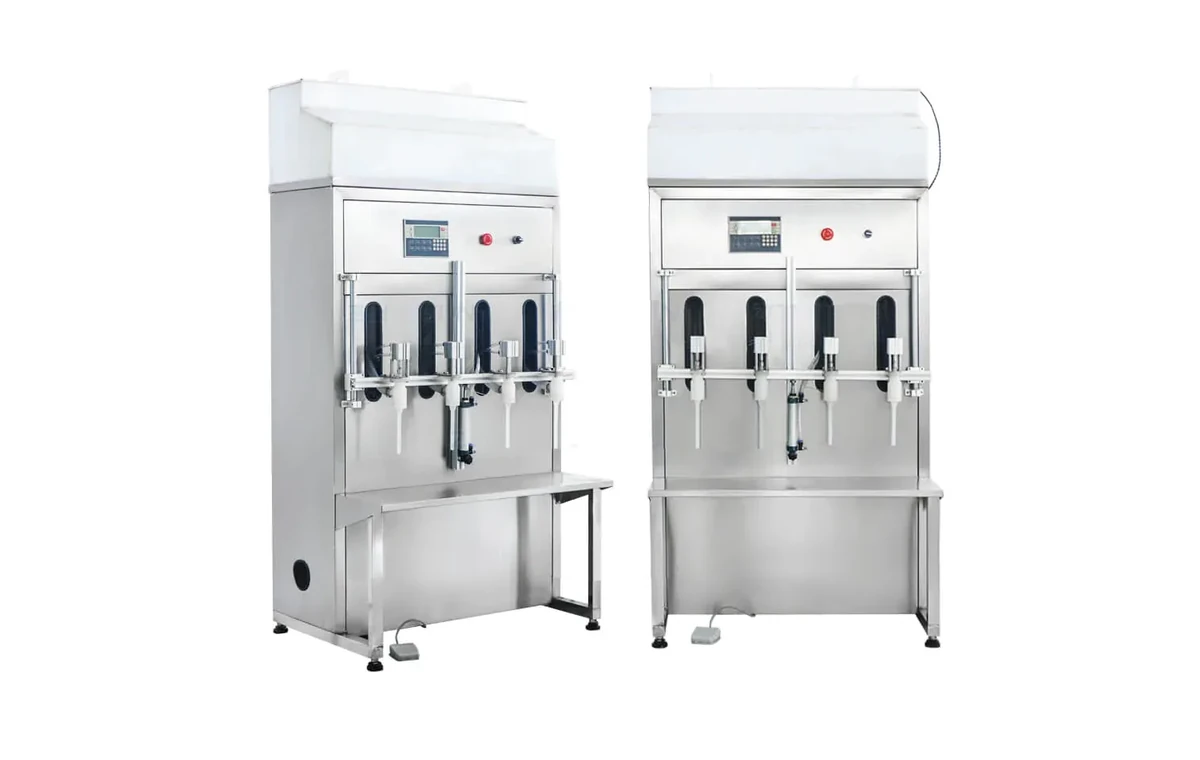
Buyer guide to wetted-part choices for chemical fillers, including hoses, seals, valves, nozzles and pumps.
Ask for advice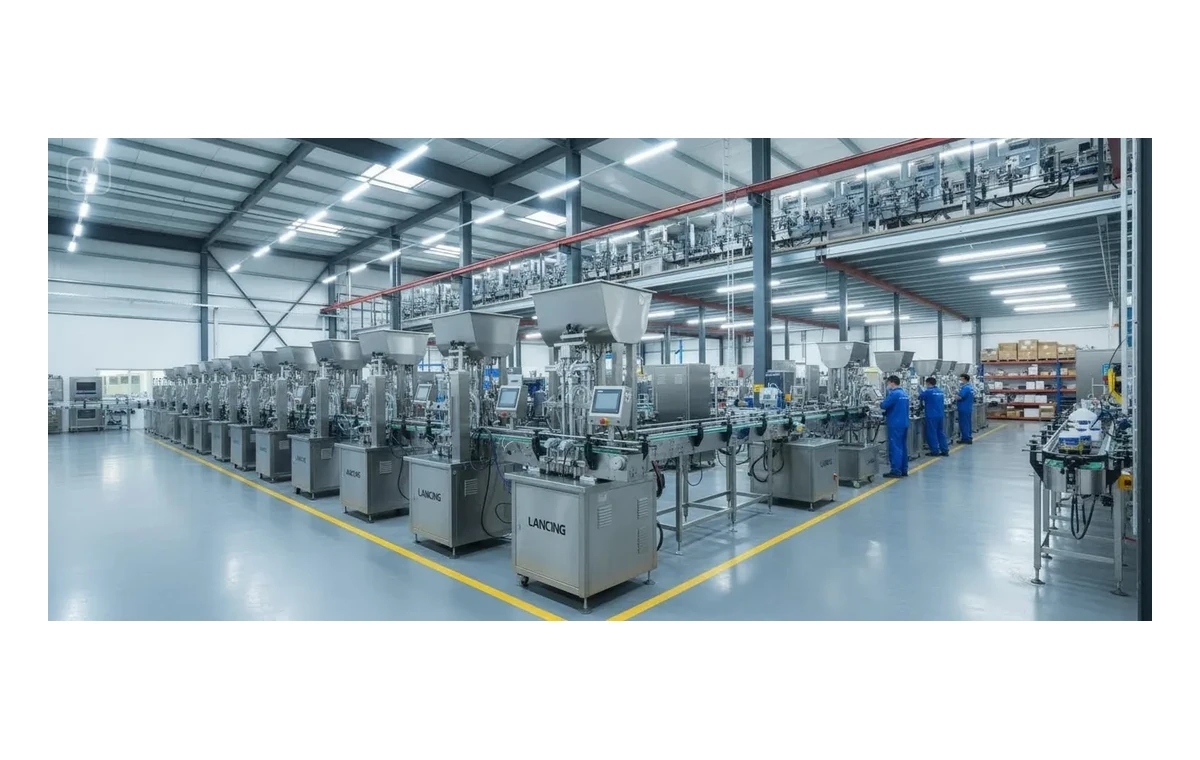
Many projects need the filler specified alongside caps, labels, conveyors and operator access.
View line options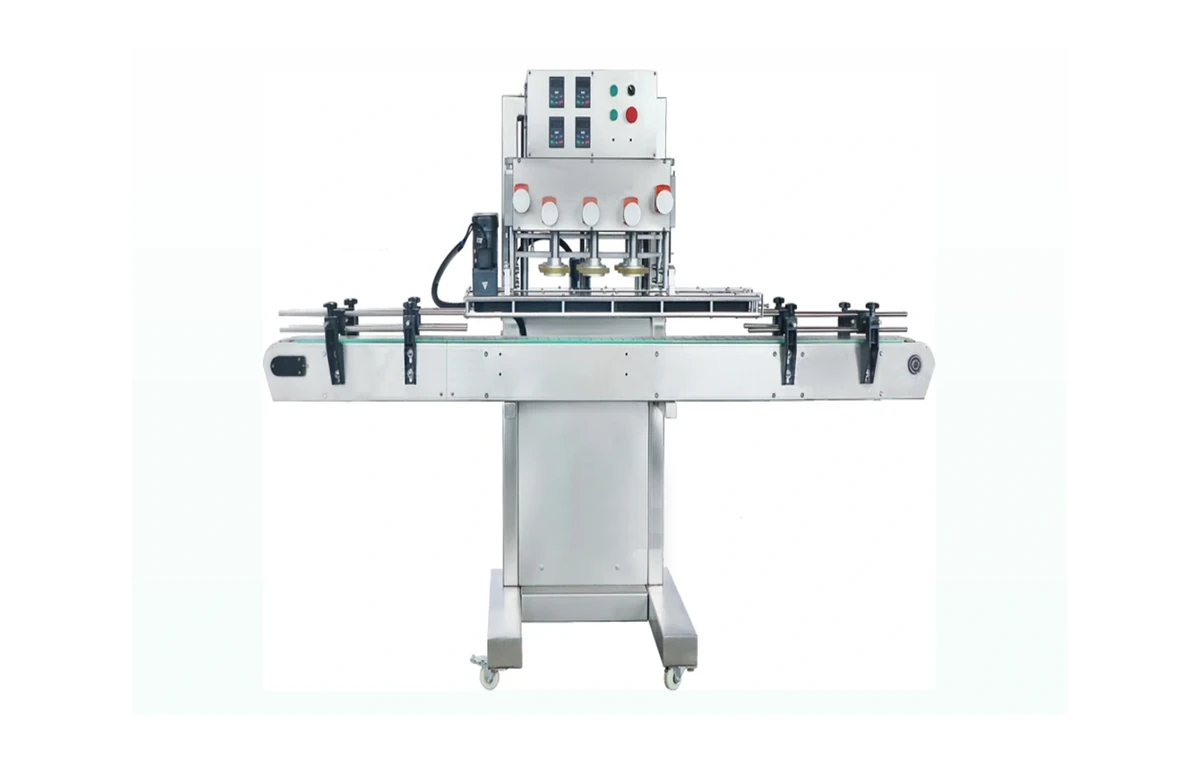
Closure style, torque, trigger orientation and cap feeding can decide whether a line runs smoothly.
View cappingFAQ
Prepare product data, SDS where relevant, viscosity, fill volume, container dimensions, closure type, target output, batch size and site constraints.
Often it can, but compatibility, cleaning, changeover and container format need to be checked before the specification is confirmed.
Yes. Closure type, torque, trigger orientation, bottle stability and line speed can affect filler selection and conveyor layout.
Speak to Lancing
Send the product, fill volume, container, closure and target output. Include SDS and compatibility notes where relevant.
Compatibility caveat
Final suitability depends on the exact formulation, concentration, impurities, temperature, pressure, exposure time, mechanical stress, cleaning chemicals and component grade. Confirm every wetted component with the relevant material or component supplier and use representative trials where uncertainty remains. The SDS helps identify hazards, but it is not a material approval or a workplace risk assessment.
Complete wetted-path matrix
Do not approve a machine from the frame or tank material alone. Build a schedule listing the exact component, manufacturer, grade, product contact, cleaning contact and evidence status. Include temporary hoses, sample valves, pressure instruments, level probes and drain points that may be overlooked in a catalogue description.
| Component group | Typical candidates to review | Qualification questions | Evidence status |
|---|---|---|---|
| Tanks, manifolds and rigid pipework | 316 stainless steel; PTFE, PP, HDPE, PVC or other engineered plastic construction where suitable | Exact grade, weld/joint condition, stress, temperature, chloride or oxidiser content, permeability and cleaning exposure | Supplier statement, drawing/BOM and trial where required |
| Seals, O-rings and valve seats | PTFE compounds and selected elastomers such as EPDM, FKM or NBR | Exact compound, swelling, hardening, compression set, dynamic movement, pressure, temperature and replacement interval | Manufacturer compatibility response for the actual formulation and duty |
| Flexible hose | PTFE-lined, thermoplastic or elastomeric hose with compatible reinforcement and fittings | Inner tube, reinforcement, end fitting, static properties, bend radius, vacuum/pressure, permeation and cleanability | Hose assembly certificate/specification and service-life plan |
| Peristaltic tubing | Application-selected elastomer or thermoplastic tube | Chemical resistance under repeated compression, fatigue life, extractables, flow change, occlusion and disposal | Tube-supplier approval plus timed product trial |
| Pump internals | Diaphragm, peristaltic, piston, gear, lobe or magnetic-drive construction | Body, diaphragm, balls, seats, shaft, seal, bearings exposed by leakage, dry-running, pressure, viscosity and solids | Complete pump BOM/material statement and operating limits |
| Flow meter or weighing system | Compatible wetted meter or non-contact weight measurement | Meter principle, conductivity, density, entrained air, minimum flow, lining/electrodes, calibration and cleaning | Application review, calibration plan and product test |
| Nozzles and shut-off parts | Compatible metal/plastic body, seals, valve tip and diving mechanism | Cut-off, drips, stringing, splash, submerged contact, neck impact, retained product and safe parking | Drawing/material list and representative fill trial |
Material families
“Stainless steel”, “PTFE” and “chemical-resistant hose” are not complete specifications. Stainless grade, surface condition, welds and crevices matter. PTFE components may contain fillers or use bonded layers. Elastomer trade families contain many compounds with different behaviour. A hose includes inner tube, reinforcement, cover and fittings. Approval should therefore identify the actual purchased component and its operating limits.
316 stainless steel is widely used in process equipment, but it is not universally resistant. Concentration, temperature, halides, oxidising conditions, deposits, crevices and cleaning chemistry can change corrosion behaviour. Where pitting, crevice corrosion or stress-corrosion risk is uncertain, obtain competent materials advice and consider product testing or an alternative contact path.
PTFE, polypropylene, polyethylene and other plastics may provide a useful route for selected aggressive chemicals, but mechanical strength, temperature, creep, permeability, stress cracking, static behaviour and joint design still need review. A non-metallic product path also does not remove separate ATEX or workplace-safety requirements.
Pump selection
| Pump route | Potential advantage | Limits to investigate |
|---|---|---|
| Peristaltic | Product remains in replaceable tubing; simple change of product-contact path | Tube compatibility and fatigue, flow pulsation, pressure, occlusion, dose range and tubing disposal |
| Air-operated diaphragm | Can provide a simple, project-selected fluid path and pneumatic drive | Diaphragm/ball/seat materials, pulsation, air consumption, stall/dead-head behaviour, prime and drainage |
| Piston | Positive-displacement volumetric control for compatible liquids and viscous products | Cylinder/seal compatibility, particulates, cleaning access, product retained behind seals and anti-drip response |
| Gear | Controlled positive displacement for compatible oils and viscous liquids | Dry running, abrasive solids, clearances, shear, shaft seals, pressure and complete drainage |
| Rotor lobe | Gentler positive-displacement route for some viscous or shear-sensitive products | Seal materials, clearances, solids, cleaning, pressure and product hold-up |
| Magnetic-drive centrifugal or other sealless route | May reduce a dynamic shaft-seal leakage point for compatible free-flowing liquids | Dry running, minimum flow, heat, solids, viscosity, magnetic coupling materials and metering method |
Cleaning and changeover
The cleaning fluid may be hotter, more concentrated or chemically different from the product. Include its temperature, contact time, sequence and frequency in every component review. Define whether cleaning is a flush, circulation, strip-down, hose exchange or dedicated product set. Identify dead legs and low points, provide safe collection for displaced chemical, and state how cleanliness or changeover completion will be verified.
List product and cleaning fluids with their full operating ranges.
Trace every wetted component, joint, hose, instrument and drain.
Obtain exact-grade supplier confirmation and document limitations.
Trial filling, inspect components and set service/replacement controls.
Wetted-parts FAQ
No. It helps identify hazards and composition information, but component approval normally needs the exact formulation, concentration, temperature and duty. HSE also states that an SDS is not itself a risk assessment.
It should identify every rigid part, hose, seal, valve, pump internal, fitting, sensor and nozzle component by exact material or grade. Metal fasteners or springs may still be present outside or, in some designs, near the product path.
Give the seal manufacturer the chemical formulation, concentration, temperature, pressure and dynamic duty. Ask about swelling, hardening, compression set, permeation and expected replacement interval for the exact compound.
A hose is a multi-layer moving assembly with reinforcement, fittings, pressure/vacuum and flexing. Its inner layer and construction may behave differently from a static plaque of the same generic polymer family.
It can help identify gross changes in mass, dimensions, hardness, appearance or surface condition, but it may not reproduce pressure, flexing, fatigue, crevices or long-term service. Agree the method and limits with competent materials support.
Yes for chemistry-critical parts. A generic seal or hose replacement can invalidate the compatibility basis. Record manufacturer, part number, grade and approved alternatives.
No. Metering, priming, foam, cut-off, stringing, pressure and container handling still have to be proved. Compatibility and filling performance are separate acceptance questions.
Wetted-path review
Include product and cleaning SDS information, concentration, temperature, fill range, pump preference and any known material restrictions.
Exact-component approval
Terms such as PTFE, polypropylene, HDPE, EPDM, FKM or 316 stainless steel are useful screening labels, but they do not describe every grade, filler, reinforcement, coating, adhesive, spring, insert or manufacturing detail that may contact the chemical.
| Component | Construction details to request | Duty conditions to include | Evidence after approval |
|---|---|---|---|
| Flexible hose or tube | Inner liner, reinforcement, outer cover, bore, wall, fittings and joining method | Concentration, temperature, pressure/vacuum, bend, movement, cleaning and exposure duration | Approved part reference, inspection criteria, storage/shelf-life information and substitution control. |
| Seal or diaphragm | Exact compound, hardness, geometry, backing/support and lubricant where applicable | Static/dynamic motion, compression, temperature, cleaning, cycling and contact time | Leak/cut-off check, condition findings and replacement record. |
| Pump, meter or valve | All internal wetted materials, seats, bearings, magnets, coatings, gaskets and connectors | Flow, solids, viscosity, pressure, dry-run risk, drainage and cleanability | Performance baseline, maintenance findings and post-intervention verification. |
| Nozzle and fitting | Body, internal shut-off, spring, tip, gasket, thread and surface finish | Splash, foam, stringing, immersion, alignment, product traps and cleaning access | Cut-off, drainage, smallest neck and largest-format challenge results. |
Keep the approved part identity in the critical spares register. Any proposed substitute should be assessed as a process change rather than accepted solely because the headline polymer or metal name appears similar.