Cleaning and waste
How should flush, drain and waste streams be planned for chemical filling?
Plan every fluid that leaves the product path: residual product, first rinse, cleaning solution, final rinse, displaced air or vapour, spill and first-off packs. Define where each stream goes, whether it can mix safely, how the clean endpoint is verified and who owns the collection, treatment and disposal system.
- Answer-first chemical filling guidance
- Project variables and evidence made explicit
- Final suitability depends on product and site review
Direct answer
Start with retained volume and incompatible streams.
Map low points, hoses, pumps, filters, valve cavities, meters, nozzles and return lines. Estimate or measure what remains after normal drain-down and identify where gravity cannot clear the path. The cleaning sequence should account for that retained product rather than assuming a nominal flush replaces it immediately.
Separate streams that react, create heat or gas, change waste classification or make recovery impractical. The filling machine can provide controlled drain and connection points, but the site must define the destination and approved handling route.
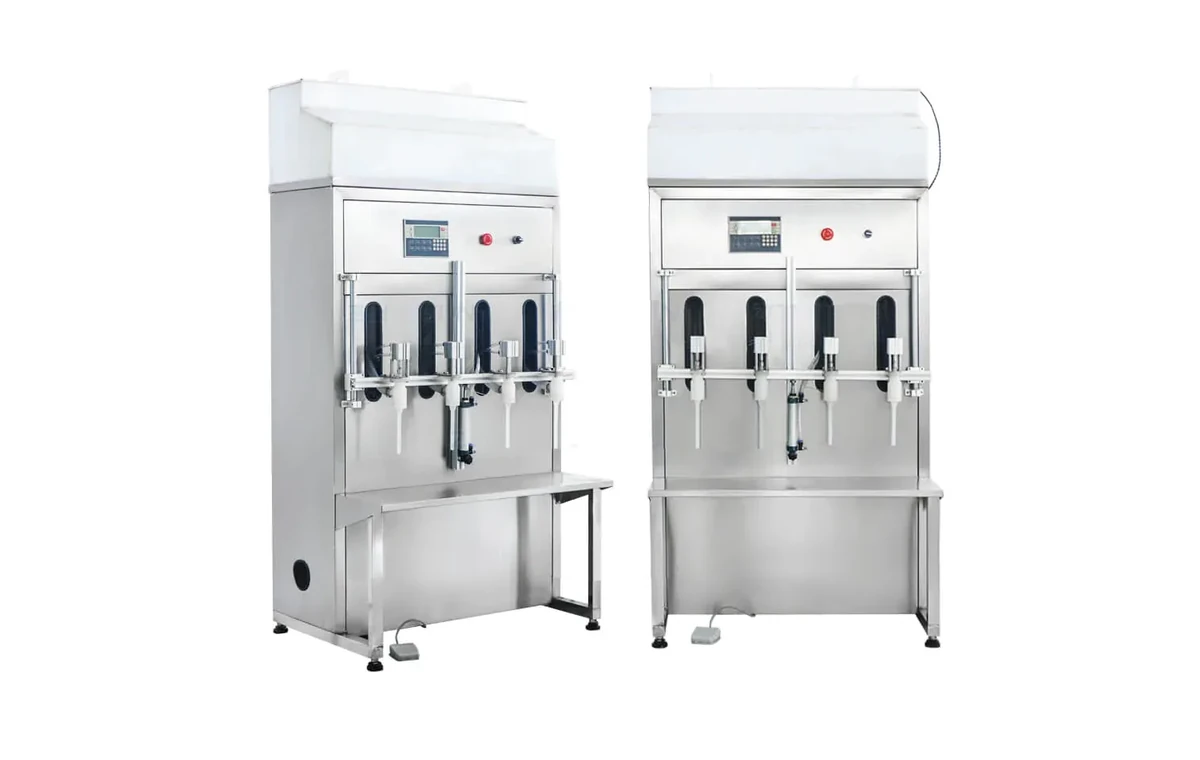
Use representative evidence
Approve the machine or process against the actual product, pack, operating range and site interfaces. Record assumptions and what must be confirmed by trial.
Decision table
A practical stream schedule for the filling project.
| Stream | Questions to answer | Acceptance evidence |
|---|---|---|
| Recoverable product | Can it return to process and under what quality controls? | Defined connection, identification, quantity and release rule |
| First flush or rinse | What concentration and incompatibility can be expected? | Segregated route, container and safe operating sequence |
| Cleaning solution | Is it compatible with every component and waste stream? | Material approval, temperature/dwell limits and collection plan |
| Final rinse | What proves the clean endpoint? | Site-approved visual, analytical or process measurement and sampling point |
| Spill and drip collection | Can it enter the same route as cleaning waste? | Containment capacity, drain isolation and disposal responsibility |
| First-off packs | How are they identified, checked and released or disposed? | Controlled segregation and documented acceptance |
Decision sequence
Write the changeover as an executable sequence.
Stop and isolate the supply
Prevent unexpected pressure or upstream pump flow while the path is opened or drained.
Recover or drain product
Use the defined destination and identify the point at which recovery changes to waste.
Apply the cleaning sequence
Control fluid, concentration, temperature, dwell, movement and required dismantling.
Verify the endpoint
Sample at the worst credible retained point and use the site-approved release method.
Restart and release
Prime safely, segregate first-off packs and confirm product, recipe, connections and cleanliness.
Authoritative context
Exposure and waste planning
HSE COSHH guidance requires employers to assess and control exposure, including during cleaning, and to plan storage and disposal of waste. Review current HSE COSHH assessment guidance. Final compatibility, environmental and disposal arrangements need competent site-specific approval.
Avoidable errors
Common specification mistakes.
- Providing a drain connection without defining the waste destination.
- Using the product-compatible seal schedule without checking cleaning fluid.
- Treating a fixed flush volume as proof of cleanliness.
- Combining residues that can react or create a hazardous waste stream.
- Forgetting return lines, filters and sample points in retained-volume testing.
Buyer questions
Related questions about how should flush, drain and waste streams be planned for chemical filling.
What is a clean endpoint?
A clean endpoint is the defined evidence that the previous product and cleaning fluid have been reduced to the site-approved condition for the next duty. It may use visual inspection, rinse analysis, conductivity, pH, colour, mass balance or another validated method depending on the consequence and product.
How should incompatible residues be separated?
Identify possible reactions before design, provide clearly identified connections and containers, prevent an incorrect valve path, and define where the stream changes from recoverable product to waste. The site should approve treatment, storage and disposal.
Why should retained volume be measured?
Retained volume determines how much old product can remain, how much flush is required and where contamination or crystallisation may occur. Measure or demonstrate it on the real hose, pump, valve, meter, nozzle and return arrangement rather than only the nominal pipe volume.
What should FAT include for flushing and drainage?
FAT should demonstrate isolation, drain-down, connection identification, dismantling access, the agreed flush sequence, retained points, safe collection and restart. Where hazardous product cannot be used, agree a representative surrogate and what must still be confirmed at site.
Speak to Lancing
Include cleaning and waste in the machinery scope.
Send the product-change sequence, cleaning fluids, clean-endpoint method, recovery and waste destinations, retained-volume concerns and the site connections available.