Closure performance
Why does cap torque change after chemical bottle capping?
Cap torque can change after application because the closure, liner, bottle thread and headspace relax, cool, warm or interact with product residue. Application torque and later removal torque are different measurements, so the acceptance method must state the pack condition, delay, tool, sample and seal evidence rather than relying on one immediate reading.
- Answer-first chemical filling guidance
- Project variables and evidence made explicit
- Final suitability depends on product and site review
Direct answer
Test the closure system, not only the capper setting.
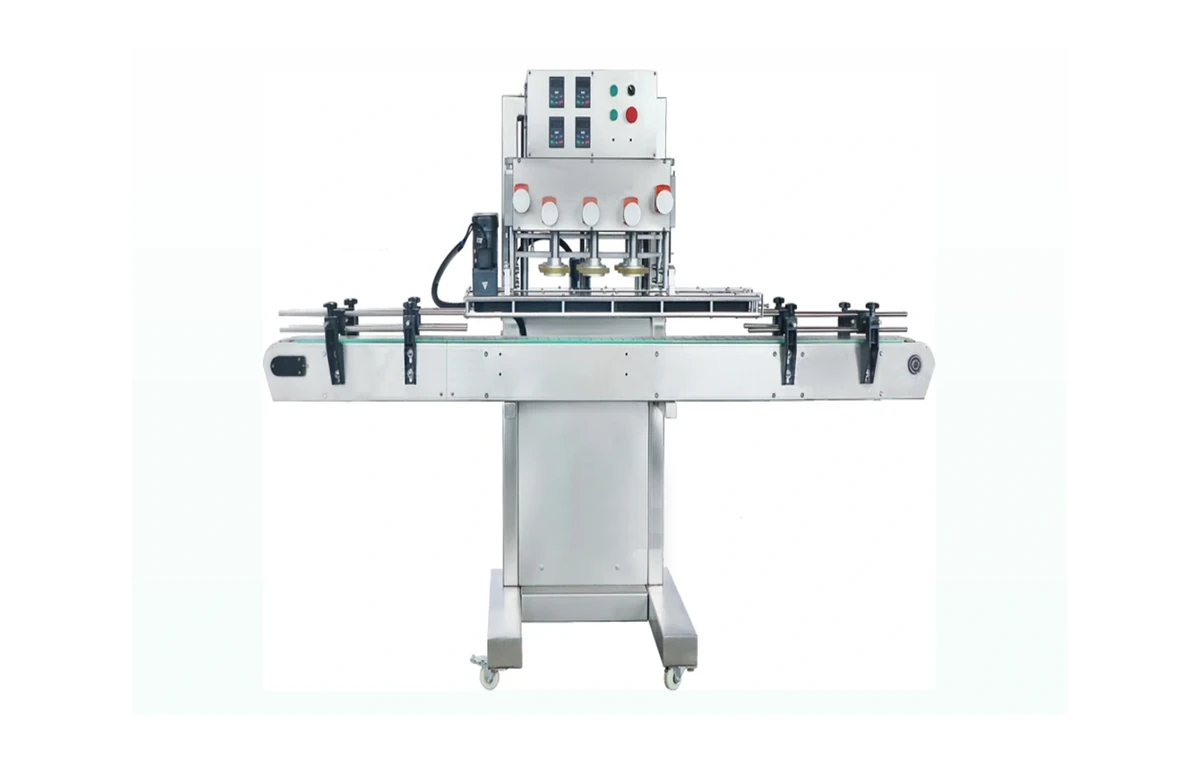
The capper applies force through a chuck, spindle or other head while the bottle is supported. The reading or setting does not directly prove the liner compressed correctly, the thread engaged fully or the pack will remain sealed after temperature change, handling and storage.
Define application conditions and the later check. Use the real bottle, closure, liner, product, fill level and any induction-seal or tamper-evident component. Record time between capping and measurement.
Use representative evidence
Approve the machine or process against the actual product, pack, operating range and site interfaces. Record assumptions and what must be confirmed by trial.
Decision table
Variables that can change torque or seal evidence.
| Variable | Possible effect | How to challenge it |
|---|---|---|
| Bottle and neck tolerance | Changes thread engagement, top load and chuck alignment | Run dimensional extremes and different mould cavities |
| Closure and liner tolerance | Changes friction, compression and removal behaviour | Sample normal supply batches and inspect seating |
| Product on thread or seal surface | Lubricates, binds or prevents liner or induction seal contact | Run clean and credible contaminated-neck conditions |
| Pack flexibility | Body twists or neck moves under support and top load | Test filled soft bottles with production guides and grippers |
| Temperature and time | Materials relax or contract after capping | Measure immediately and after agreed conditioning |
| Tool and method | Different meters, speeds and operators give different results | Define calibrated tool, fixture, direction, rate and sample method |
Decision sequence
Create a closure acceptance method that can be repeated.
Define the seal objective
Leak resistance, liner seating, vent function, induction seal, tamper evidence or controlled opening.
Fix the pack condition
Product, fill level, bottle, cap, liner, temperature and neck cleanliness.
Set the measurement method
Application setting, removal-torque delay, tool, fixture and sample size.
Condition and handle packs
Include normal cooling, storage orientation, transport or pressure changes where relevant.
Use more than torque
Combine torque with visual, dimensional, leak, seal or function checks appropriate to the closure.
Avoidable errors
Common specification mistakes.
- Equating capper set torque with removal torque.
- Measuring immediately but selling or transporting after long conditioning.
- Testing dry empty bottles when product residue changes friction.
- Ignoring bottle body twist or neck deflection.
- Using torque as the only evidence for a pump, trigger, liner or induction seal.
Buyer questions
Related questions about why does cap torque change after chemical bottle capping.
Is application torque the same as removal torque?
No. Application torque describes the closing process or capper setting; removal torque is measured later when opening the pack. Material relaxation, temperature, liner compression, thread friction and product residue can make the values differ.
When should removal torque be measured?
Measure at the time points relevant to the product and distribution process, using a defined conditioning temperature, orientation, tool and method. An immediate check is useful for setup but may not represent later opening or seal performance.
Can product on the neck change torque?
Yes. Product can lubricate or bind threads, change chuck grip, prevent liner contact or contaminate an induction-seal surface. Test the credible worst neck condition and set filling or wipe controls that keep the normal process inside the approved boundary.
Does correct torque prove that the pack is sealed?
Not by itself. A closure can show an expected torque while cross-threaded, poorly lined or contaminated. Use the relevant leak, liner, induction-seal, vent or functional checks in addition to the torque method.
Speak to Lancing
Send the full bottle and closure system.
Include bottle and cap samples across tolerance, liners, product, fill level, neck condition, required seal function and the measurement method your site uses.