Product behaviour
Confirm viscosity, foaming, corrosiveness, flammability, solids, fumes and cleaning requirements before choosing pump and nozzle type.
technical term
Cap torque affects leak control, opening force and repeatable closure sealing.
Specification guide
Chemical packs often need consistent cap torque because leaks, product on threads or distorted bottles can cause failures. The capper must match the cap, neck finish, bottle stability and target line speed.
Trigger sprays, pumps and screw caps may need different handling. Filled weight can change bottle stability at the capper.
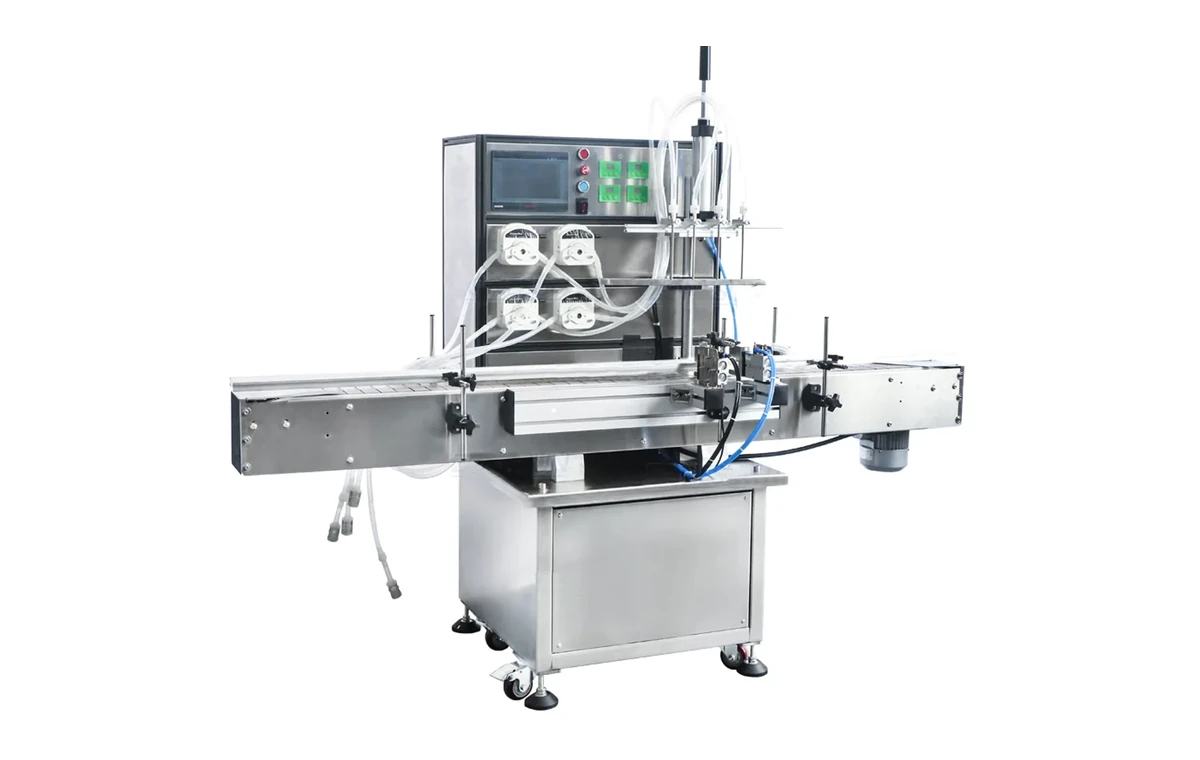
Send filled bottle and cap samples to assess torque and handling.
Buyer checks
These points are included because they match the practical questions buyers usually ask before requesting a chemical filling machine quotation.
Confirm viscosity, foaming, corrosiveness, flammability, solids, fumes and cleaning requirements before choosing pump and nozzle type.
Bottle, jerrycan, pail or drum shape affects handling, neck access, fill height, cap torque, label position and conveyor layout.
Hourly target, batch size, changeover and operator availability decide whether semi-automatic, compact automatic or inline filling is most practical.
Wetted materials, hoses, seals, pumps and nozzles should be reviewed against SDS data and the actual product sample.
Capping, labelling, coding, checkweighing, accumulation and pack-off should be considered early to avoid bottlenecks.
Air, power, space, ATEX zoning, ventilation, drainage, manual handling and cleaning access affect the final layout.
Planning table
| Detail | Why it matters |
|---|---|
| Product name and SDS | Shows chemical compatibility, flammability, corrosiveness and handling considerations. |
| Fill volume range | Controls dosing system, cylinder size, pump choice and changeover approach. |
| Container drawings or samples | Confirms neck size, stability, cap style, label position and conveyor handling. |
| Closure type | Determines screw capping, trigger fitting, pump closure handling, torque control or cap feeding. |
| Output target | Separates manual, semi-automatic, compact automatic and multi-head line routes. |
| Site notes | Power, air, space, operator access, ventilation and zoning can change the recommended line. |
Common questions
No. The product data, pack size, site conditions and output target decide whether this method or component is suitable.
Send the SDS, fill range, container and closure samples, accuracy needs and production target.
Yes. Filling, capping, labelling and conveyors can be reviewed together.
Next steps
Use these pages to compare the product, pack, closure and automation choices before sending your enquiry.
Guides for choosing filling machinery.
Pages on foam, drips, spills and capping issues.
Send the details for advice.
Send an enquiry
Send your product, container, closure and target output. We will suggest a practical route for filling, capping and line integration.