Container behaviour
Why do flexible bottles distort during filling and capping?
Flexible plastic bottles can distort when internal pressure changes, warm product softens the pack, conveyor guides squeeze the sidewalls, capping applies excessive top load, or the container is not vented as the process expects. Machine settings and supports must be tested with production bottles across their real dimensional and stiffness tolerances.
- Answer-first chemical filling guidance
- Project variables and evidence made explicit
- Final suitability depends on product and site review
Direct answer
Treat the bottle as a process component, not a fixed dimension.
HDPE and other flexible containers can change shape under surprisingly small differences in pressure, grip, temperature or neck load. Distortion can begin at filling and only become visible after capping, cooling, storage or conveyor transfer. It can affect fill-level appearance, cap engagement, label position and leak performance.
Use real bottle drawings where available, but also test physical samples from different mould cavities, supply batches and storage conditions. Nominal dimensions do not describe wall distribution or stiffness.
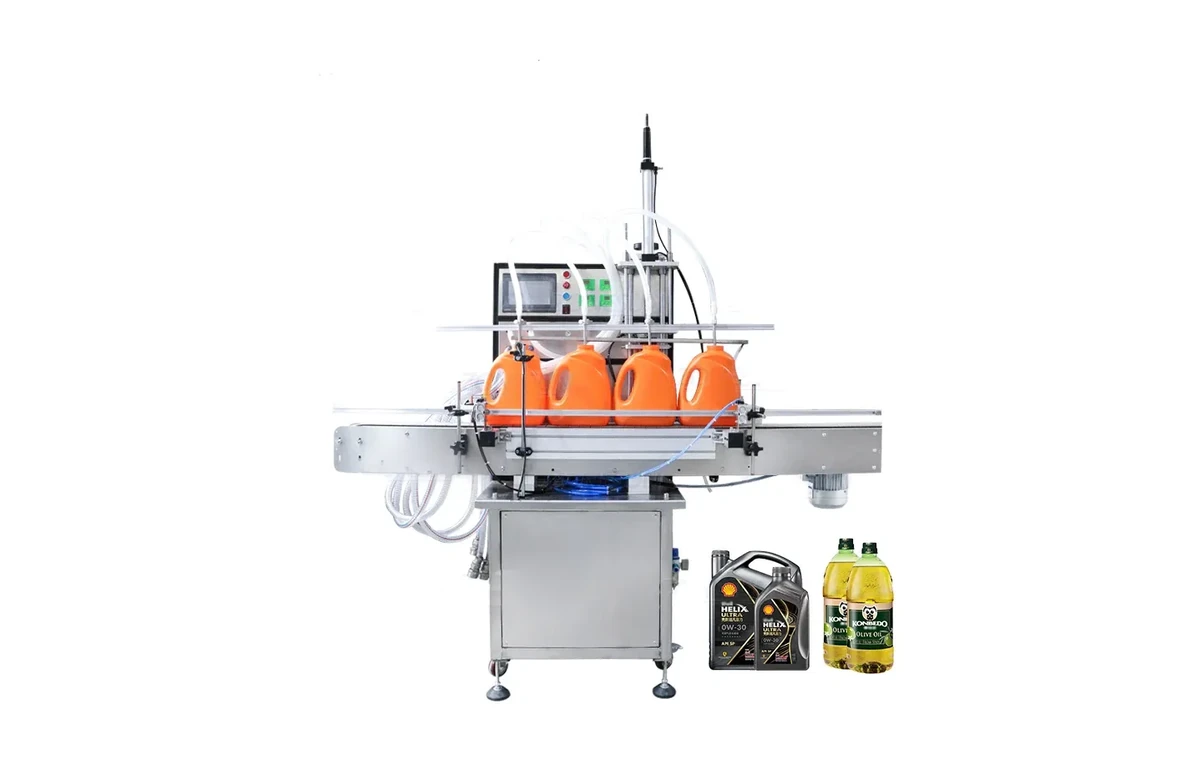
Use representative evidence
Approve the machine or process against the actual product, pack, operating range and site interfaces. Record assumptions and what must be confirmed by trial.
Decision table
Where distortion can enter the filling and capping sequence.
| Stage | Possible cause | What to observe |
|---|---|---|
| Empty-container handling | Side guides, belts or grippers compress an unstable body | Bottle centring, ovality, neck position and recovery after release |
| Filling | Nozzle seal, pressure, vacuum, high product impact or hot product changes shape | Panel movement, air escape, fill level, splash and neck stability |
| Capping | Top load, chuck grip, cap thread variation or bottle rotation | Neck deflection, body twist, liner seating and later removal torque |
| Cooling or storage | Thermal contraction, product absorption, sealed headspace or chemical interaction | Delayed paneling, leakage, label wrinkling and pallet stability |
| Conveying and labelling | Guide pressure or wrap belts reshape the filled bottle | Label registration, scuffing and permanent deformation |
Decision sequence
Use a container-handling trial that continues after the line.
Select representative packs
Include minimum and maximum dimensions, lightest wall, different mould cavities and aged or conditioned samples where relevant.
Record fill condition
Measure product temperature, fill level, nozzle position, pressure or vacuum and headspace.
Challenge support and top load
Run guides, clamps, chuck or belt settings across the allowed range.
Inspect immediately and later
Check shape, cap, leakage and label after filling, after cooling and after the normal storage interval.
Approve a setting window
Define acceptable supports and settings rather than one undocumented best adjustment.
Avoidable errors
Common specification mistakes.
- Testing only one perfect prototype bottle.
- Using an empty bottle to approve capping support and torque.
- Ignoring product temperature and delayed paneling.
- Setting conveyor guides tightly to solve instability and creating permanent squeeze.
- Treating a visual torque reading as proof of liner or seal integrity.
Buyer questions
Related questions about why do flexible bottles distort during filling and capping.
What causes bottle paneling after filling?
Paneling can result from cooling of a sealed headspace, internal pressure change, product absorption, hot fill, excessive vacuum, bottle wall variation or a closure and vent arrangement that does not match the pack design. The cause should be confirmed with the bottle and closure supplier as well as the filling-line trial.
When is neck support needed?
Neck support is useful when the bottle body cannot resist nozzle, capper or handling forces without moving. The support must match the neck finish without damaging threads or restricting natural pack movement. Test it with filled bottles and the full tolerance range.
Can conveyor guides create bottle distortion?
Yes. Closely set guide rails, side belts or timing screws can ovalise or permanently squeeze a flexible bottle, especially when warm or full. Settings should control the pack without becoming the primary structural support unless the system is designed and tested that way.
What bottle samples are needed for testing?
Provide enough empty bottles to represent dimensional and stiffness variation, together with closures, liners and labels. Include samples from normal production tooling and tell the supplier about minimum wall, recycled-content or material changes that may affect rigidity.
Speak to Lancing
Test the real bottle and closure system.
Send production bottles across the normal tolerance, closures and liners, product fill temperature, fill level, label and the downstream handling or storage conditions that reveal distortion.