Responsibility boundary
What is the difference between machine suitability and site compliance?
A machine can be suitable for a defined product and intended use without making the complete workplace automatically compliant. The supplier must define and support the equipment scope; the employer must assess the real site, installation, dangerous substances, exposure, connected equipment, work tasks, training, maintenance and emergency arrangements.
- Answer-first chemical filling guidance
- Project variables and evidence made explicit
- Final suitability depends on product and site review
Direct answer
Write the boundary into the requirement and handover.
The machine specification should state the intended products, operating envelope, materials, controls, protective measures, utilities and external interfaces on which the design depends. It should also identify documentation, inspections, tests and residual risks within the supplier’s scope.
The employer’s assessment covers the installed workplace: bulk transfer, ventilation, zoning, other ignition sources, spill response, people, maintenance, cleaning, training, existing equipment and changes after handover. Integration decisions can move responsibilities, so record them rather than assuming one party owns everything.
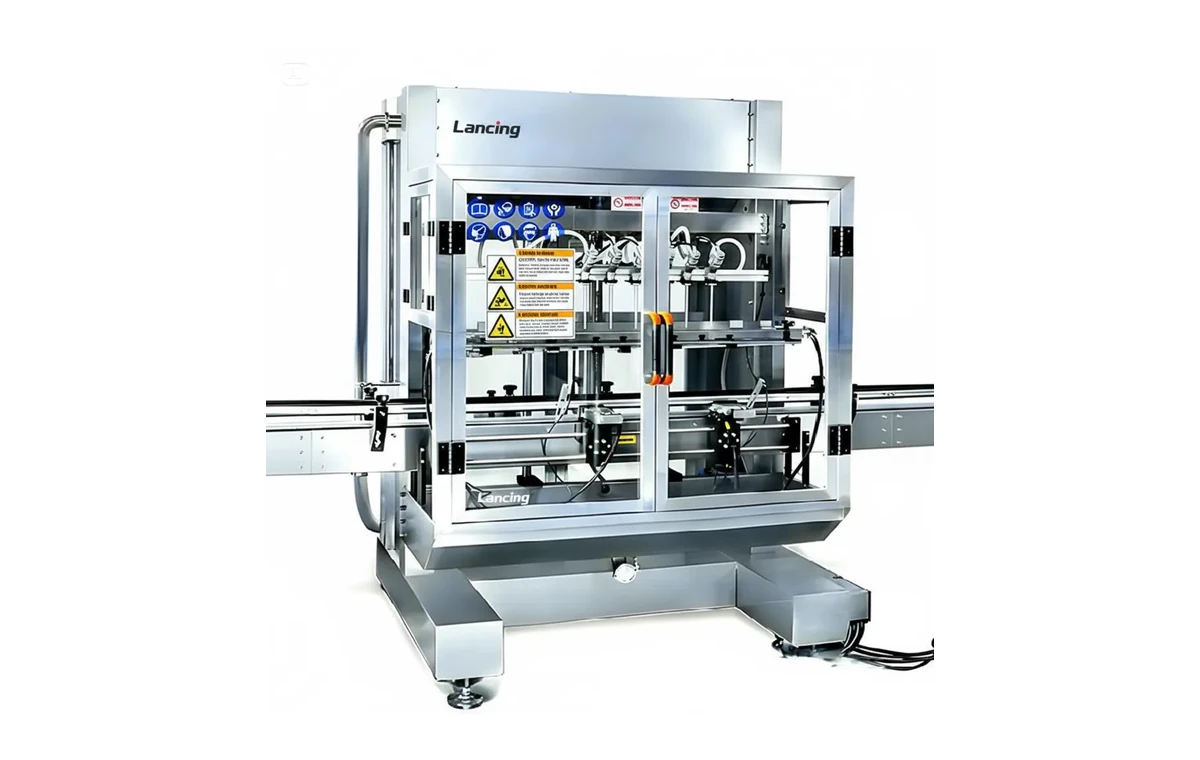
Use representative evidence
Approve the machine or process against the actual product, pack, operating range and site interfaces. Record assumptions and what must be confirmed by trial.
Decision table
Separate typical evidence by owner and interface.
| Area | Machine or supplier evidence | Site or employer evidence |
|---|---|---|
| Intended use | Defined product, pack, operating limits and machine instructions | Confirmation that the real duty and working conditions match the intended use |
| Chemical exposure | Approved contact-path schedule and stated limitations | COSHH assessment, exposure controls, cleaning and emergency arrangements |
| Fire and explosion | Equipment scope and interfaces based on supplied classification data | DSEAR assessment, release sources, area classification and ignition-source control across the workplace |
| Installation | Foundation, utilities, connection and commissioning requirements | Correct installation, inspection before use and control of connected equipment |
| Operation and maintenance | Instructions, isolation points, safeguards and maintenance information | Training, safe systems of work, inspection, maintenance and control of modifications |
Decision sequence
Close the responsibility boundary before final design.
List every external interface
Product supply, drains, extraction, electrical, air, conveyors, coding, inspection, data and emergency systems.
Assign the design owner
State who specifies, supplies, installs, commissions and verifies each interface.
Record the design input
Attach SDS, site assessment, area classification, utility data and existing-equipment information.
Plan acceptance
Separate factory-verifiable functions from installation-dependent site checks.
Control later changes
Review the duty when product, pack, software, layout, extraction, utilities or working method changes.
Authoritative context
Authoritative UK guidance
HSE states that an SDS helps an employer make a risk assessment but is not itself the assessment. DSEAR and COSHH place workplace duties on employers, while PUWER requires work equipment to be suitable, maintained and used with appropriate information and training. Review current SDS guidance, DSEAR guidance, COSHH assessment guidance and PUWER guidance with competent advice.
Avoidable errors
Common boundary mistakes.
- Treating a component certificate as evidence for the installed line.
- Asking the supplier to infer the hazardous area from the product name.
- Leaving extraction, drains or bulk transfer outside both scopes.
- Assuming factory testing proves site utilities and connected machinery.
- Changing the product or layout without reviewing the original design basis.
Buyer questions
Related questions about what is the difference between machine suitability and site compliance.
Who owns the COSHH and DSEAR risk assessments?
The employer or site duty holder owns the workplace assessments and must ensure competent input. A machinery supplier can provide equipment information and respond to defined site requirements, but cannot replace the employer’s assessment of real substances, tasks, people and installation.
Does machinery or ATEX documentation replace the site assessment?
No. Documentation describes a product or equipment scope and its declared conditions. The site must confirm correct selection, installation, connected equipment, ventilation, ignition control, operation, maintenance and changes within the workplace assessment.
Which site interfaces should be defined before order?
Define product transfer and return, utilities, extraction, drains, spill containment, foundations, conveyors, controls, data, emergency systems, access, cleaning and waste. Assign who specifies, supplies, installs, commissions and verifies each interface.
What changes after installation should trigger a review?
Review a change in formulation, concentration, cleaning fluid, temperature, pack, closure, throughput, software, nozzle, pump, layout, ventilation, area classification, utilities or operating task where it could affect the approved basis or risk controls.
Speak to Lancing
Define the supplier and site responsibilities before order.
Send the product and pack duty, workplace assessment inputs, classified-area information where relevant, layout and a list of every external interface that must be designed or verified.