Product behaviour
Confirm viscosity, foaming, corrosiveness, flammability, solids, fumes and cleaning requirements before choosing pump and nozzle type.
hypochlorite jerrycan filling
Specify sodium hypochlorite jerrycan filling around corrosion resistance, pack handling, cap sealing and operator workflow.
Specification guide
Sodium hypochlorite projects often involve larger handled packs where splashing, dripping and cap thread contamination can cause clean-up and sealing problems. A good specification reviews product strength, fill volume, jerrycan stability and cap type.
Weigh filling is often considered for larger containers because it can support accuracy over bigger fill volumes. The final choice depends on viscosity, foam, accuracy tolerance, budget and target packs per hour.
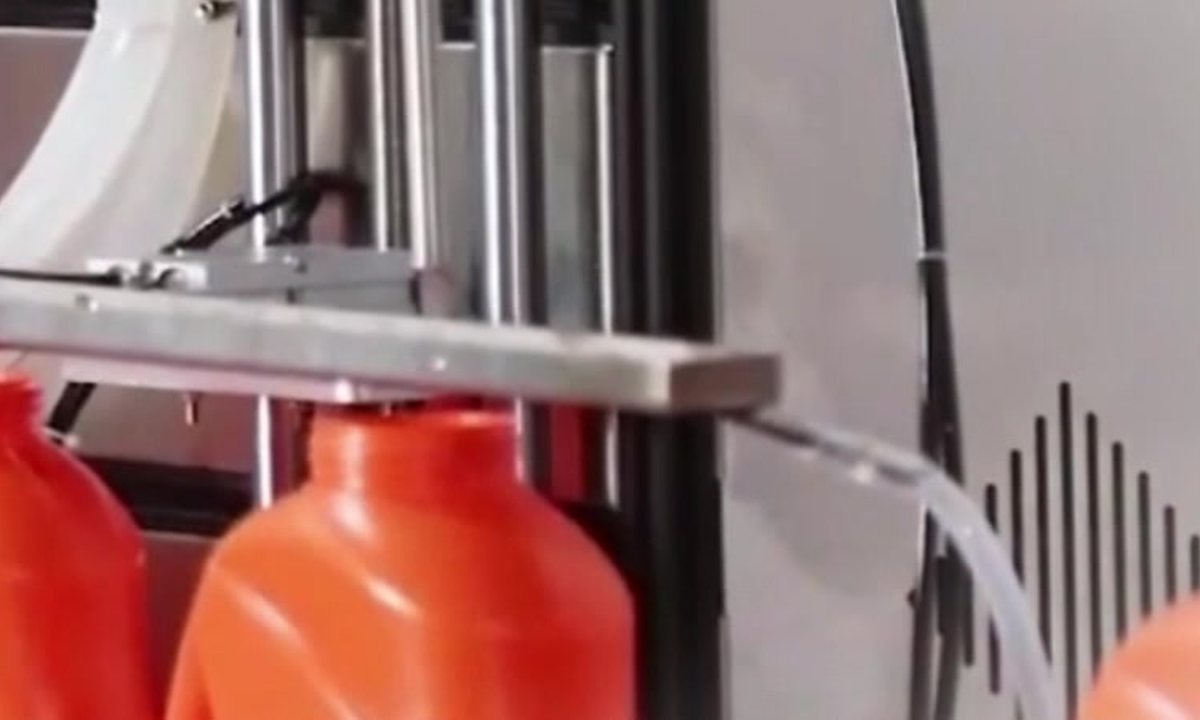
The quotation should include the filled weight target, empty container weight, cap details, SDS, sample packs and the intended production rate.
Buyer checks
These points are included because they match the practical questions buyers usually ask before requesting a chemical filling machine quotation.
Confirm viscosity, foaming, corrosiveness, flammability, solids, fumes and cleaning requirements before choosing pump and nozzle type.
Bottle, jerrycan, pail or drum shape affects handling, neck access, fill height, cap torque, label position and conveyor layout.
Hourly target, batch size, changeover and operator availability decide whether semi-automatic, compact automatic or inline filling is most practical.
Wetted materials, hoses, seals, pumps and nozzles should be reviewed against SDS data and the actual product sample.
Capping, labelling, coding, checkweighing, accumulation and pack-off should be considered early to avoid bottlenecks.
Air, power, space, ATEX zoning, ventilation, drainage, manual handling and cleaning access affect the final layout.
Planning table
| Detail | Why it matters |
|---|---|
| Product name and SDS | Shows chemical compatibility, flammability, corrosiveness and handling considerations. |
| Fill volume range | Controls dosing system, cylinder size, pump choice and changeover approach. |
| Container drawings or samples | Confirms neck size, stability, cap style, label position and conveyor handling. |
| Closure type | Determines screw capping, trigger fitting, pump closure handling, torque control or cap feeding. |
| Output target | Separates manual, semi-automatic, compact automatic and multi-head line routes. |
| Site notes | Power, air, space, operator access, ventilation and zoning can change the recommended line. |
Common questions
It can be useful for larger fills because the machine can dose by weight rather than relying only on volume.
Send the SDS, fill volume, jerrycan sample, cap sample, target output and any site restrictions.
Often yes, but changeover, neck position, handle shape and conveyor stability need review.
Next steps
Use these pages to compare the product, pack, closure and automation choices before sending your enquiry.
Filling guidance for common chemical jerrycan formats.
Weigh filling options for larger chemical packs.
Machinery routes for jerrycans, pails, buckets and drums.
Send an enquiry
Send your product, container, closure and target output. We will suggest a practical route for filling, capping and line integration.