Product behaviour
Confirm viscosity, foaming, corrosiveness, flammability, fumes, solids and cleaning needs before choosing a filler.
compliance and compatibility
Chemical filler seals and hose compatibility guide for buyers specifying filling machinery.
Buyer intent
This page helps buyers searching for chemical filler seals and hoses understand what changes the filling machine recommendation before they request a quote. The aim is to match the product, container, closure, output target and site conditions with a realistic specification.
The best route is normally decided by the product safety data, viscosity, foaming, container type, closure, fill volume and the number of packs needed per hour. These details prevent a quote being based only on a generic machine name.
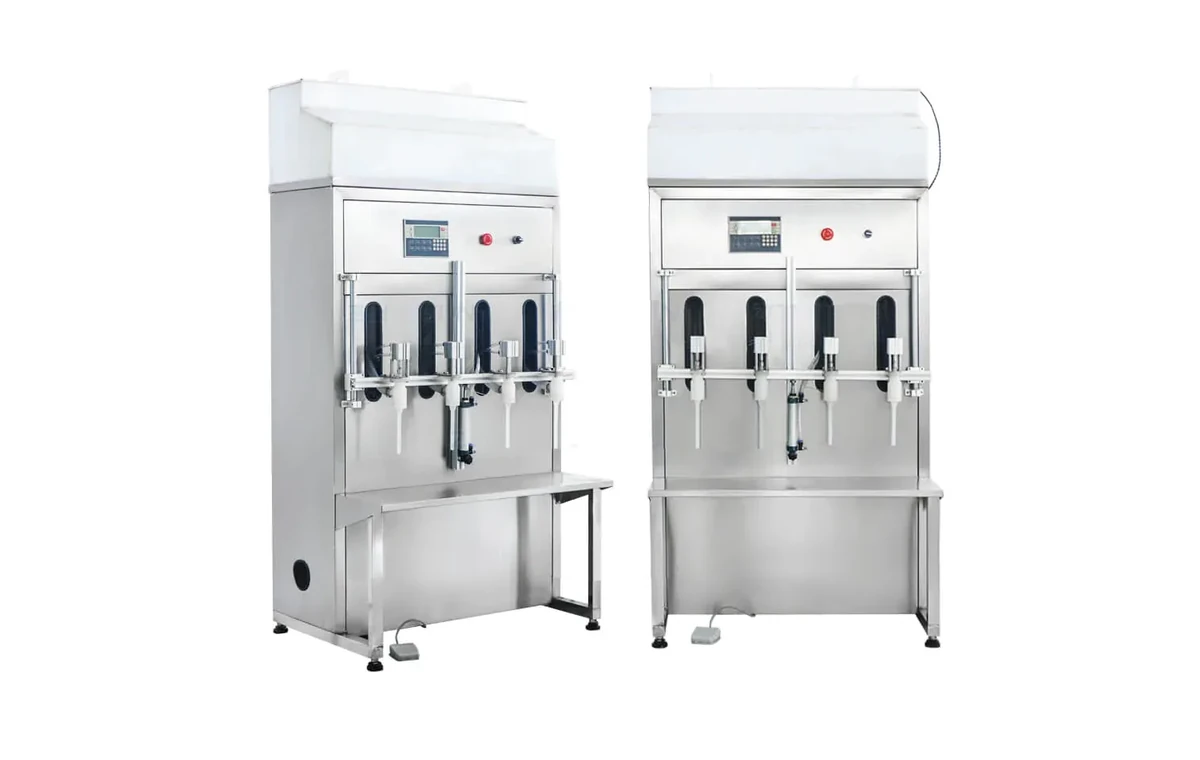
Send your SDS, pack sample, closure and target output so the filling and capping route can be checked before quotation.
What to check
These checks help separate a useful chemical filling machine enquiry from a generic web search.
Confirm viscosity, foaming, corrosiveness, flammability, fumes, solids and cleaning needs before choosing a filler.
Neck size, stability, cap style, label position and pack material can change the machine route.
Hourly target, batch size and operator availability decide whether semi-automatic or automatic equipment is practical.
Wetted materials, hoses, seals, pumps and nozzles should be reviewed against SDS data and product samples.
Capping torque, cap feeding, coding, labelling and conveyor handling should be planned with filling, not after it.
Air, power, space, ATEX/DSEAR requirements, ventilation and manual handling affect the final layout and quote.
Quote details
| Detail | Why it matters |
|---|---|
| Product name and SDS | Identifies chemical compatibility, flammability, corrosiveness and handling requirements. |
| Fill volume range | Sets dosing method, pump size, nozzle selection and changeover approach. |
| Container sample or drawing | Confirms neck access, stability, cap style, label position and handling method. |
| Output target | Separates manual, semi-automatic, compact automatic and multi-head filling options. |
| Accuracy and giveaway target | Determines whether volumetric, gravimetric, flowmeter, pump or piston filling should be considered. |
| Line scope | Confirms whether filling only, fill-cap, or complete fill-cap-label-convey integration is required. |
Common questions
No. It helps you prepare the product and line information for discussion. Site-specific ATEX, DSEAR and safety decisions need competent review.
Send the SDS, product sample where possible, container and closure samples, fill range, output target, site notes and any capping or labelling requirements.
Yes. For chemical products it is often better to review filling, cap torque, spillage control, labelling and conveyors as one line.
Next steps
Use these pages to compare the product, pack, closure and automation choices before sending your enquiry.
Compare core filling machine options.
Review ATEX and solvent filling routes.
Send your details for advice.
Send an enquiry
Send your product, container, closure and target output. We will suggest a practical route for filling, capping and line integration.